
The first drink that arrives at the table of a hotel, a café, or a restaurant is not a small detail. It is the first promise of hospitality. Professional HORECA drinks are now called upon to do more than just meet a need: to express the identity of the space, to leave a clear taste memory, and to give the visitor a reason to return.
For the modern professional, the choice is not just between hot and cold, classic and alternative. It is between the anonymous and the authentic. Between a standardized iced tea with a flat taste and a drink that conveys the aroma of the Greek landscape, the knowledge of herbs, and an aesthetic worthy of the experience that the space wants to offer.
Why have professional HORECA drinks changed
Hospitality has become more demanding, not because the visitor is constantly looking for something impressive, but because they recognize quality more and more easily. They read labels, are interested in the origin, choose less sugar, cleaner compositions, and flavors with truth. A menu that does not offer something beyond the predictable options often seems to have been left behind by the times.
This does not mean that every list needs to be filled with complicated recipes. It means that a distinct, well-chosen proposal is needed. A premium infusion in the hotel’s morning experience, a herbal ice tea in the fridge of a boutique café, or a refreshing, botanical option next to the food can essentially change the customer’s perception of the whole.
The category of tea and herbal drinks has a particular advantage: it can stand from morning to night. Hot, as a moment of relaxation. Cold, as a refined answer to thirst. With or without caffeine, depending on the audience and the moment of consumption. This flexibility is valuable, as long as the raw material has personality.
The Greek raw material is not just a story
The mountain tea, the sage, the mint, the chamomile, and the aromatic expressions of the Greek land do not need artificial exaggeration to stand out. They have a natural character, aromatic depth, and a familiarity that speaks to both the Greek visitor and the traveler who wants to taste something truly local.
Their value, however, does not lie only in the narrative of their origin. It lies in the taste in the cup or glass. When the extract is essential, when the recipe respects the herb and does not cover it with excessive sweetness or vague aromas, the result has clarity. The customer does not need to be explained why it is better. They perceive it in the first sip.
For spaces that cater to an international audience, the Greek botanical identity also functions as an act of cultural hospitality. It is not a souvenir placed on the shelf. It is a living experience of the place, served with care. For a city hotel, a beach bar, a restaurant of modern Greek cuisine, or a concept store with a café, this detail can become particularly recognizable.
What distinguishes a premium drink in practice
The premium position is not built only with beautiful packaging, although aesthetics count. It is built from the consistency between what the product promises and what it offers in service. A professional drink must have stable quality, easy management by the team, and a presence that upgrades the table or minibar.
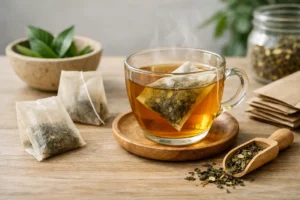
In infusions, the form of the product has a direct impact on the experience. Biodegradable pyramids allow the leaves, flowers, and herbs to develop better in water, offering a fuller aroma and cleaner extraction. At the same time, they facilitate the staff to serve consistently, without needing specialized technique every time.
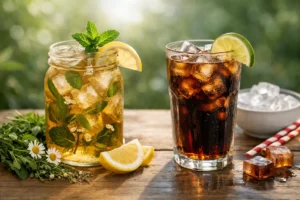
In ready-to-drink iced teas, the difference is seen in balance. A premium herbal ice tea does not need to pretend to be a soft drink. It can be refreshing without being monotonously sweet, aromatic without being heavy, and enjoyable without hiding the raw material behind intense flavors. The presence of real herbal extracts provides this sense of authenticity that is lacking from much of the conventional market.
There is, of course, also the practical criterion. A product can be excellent in taste, but not fit the rhythm of a space with very high traffic. That’s why the right choice depends on the service model. Ready-to-drink premium options are ideal when speed and stability are a priority. Infusions add ceremony and value when the space can devote a few extra minutes to presentation.
From the morning buffet to the evening table
In the hotel, the drink has the opportunity to accompany many different moments. In the morning, a carefully prepared tea station with Greek herbs shows that quality does not stop at coffee. In the room, a elegant infusion option works like a small gesture of care. At the pool bar or lobby, a cold herbal drink offers a more special alternative to the usual fridge options.
In the café, the challenge is different. The menu needs products with clear identity, which can be easily proposed by the staff. The phrase “cold tea from Greek herbs” is already an invitation to try, as long as the product justifies the description. When combined with a light meal, a dessert, or a brunch, it creates a more complete experience than a simple accompanying drink.
In the restaurant, herbal ice teas can acquire their place as carefully selected non-alcoholic proposals. They are particularly useful for visitors who do not wish for alcohol but want something with complexity and character. The goal is not to mimic wine or a cocktail. It is to offer their own clear, gastronomic journey.
Presentation is part of the taste
A quality product can lose its power if served indifferently. The right glass, the clean temperature, a discreet garnish where it fits, and a brief description from the staff are enough. It does not require theatricality. It requires intention.
For hot infusions, the temperature of the water and the extraction time are important. The staff must know that the herb is not treated like a hasty choice without rules. For cold drinks, proper cooling is crucial. Excessive ice can dilute the taste and wrong a carefully prepared recipe.
The packaging also speaks before the product is even opened. In an environment where the image travels quickly from the table to the screen, an award-winning design and a conscious choice of sustainable materials are not secondary elements. They declare that the space thinks about the overall experience it offers.
A choice that says something about your space
Tea Odyssey proposes a different reading of the category: 100% Greek infusions in biodegradable pyramids and premium herbal ice tea with emphasis on Greek herbal extracts and mountain tea. It is not an attempt to simply add another label to the list. It is a proposal with origin, taste consistency, and aesthetics that can stand in demanding hospitality environments.
The right choice of drink does not need to shout to be memorable. It is enough to have a place, clarity, and a reason for being. That is where hospitality begins, which the visitor takes with them, long after the last sip.