
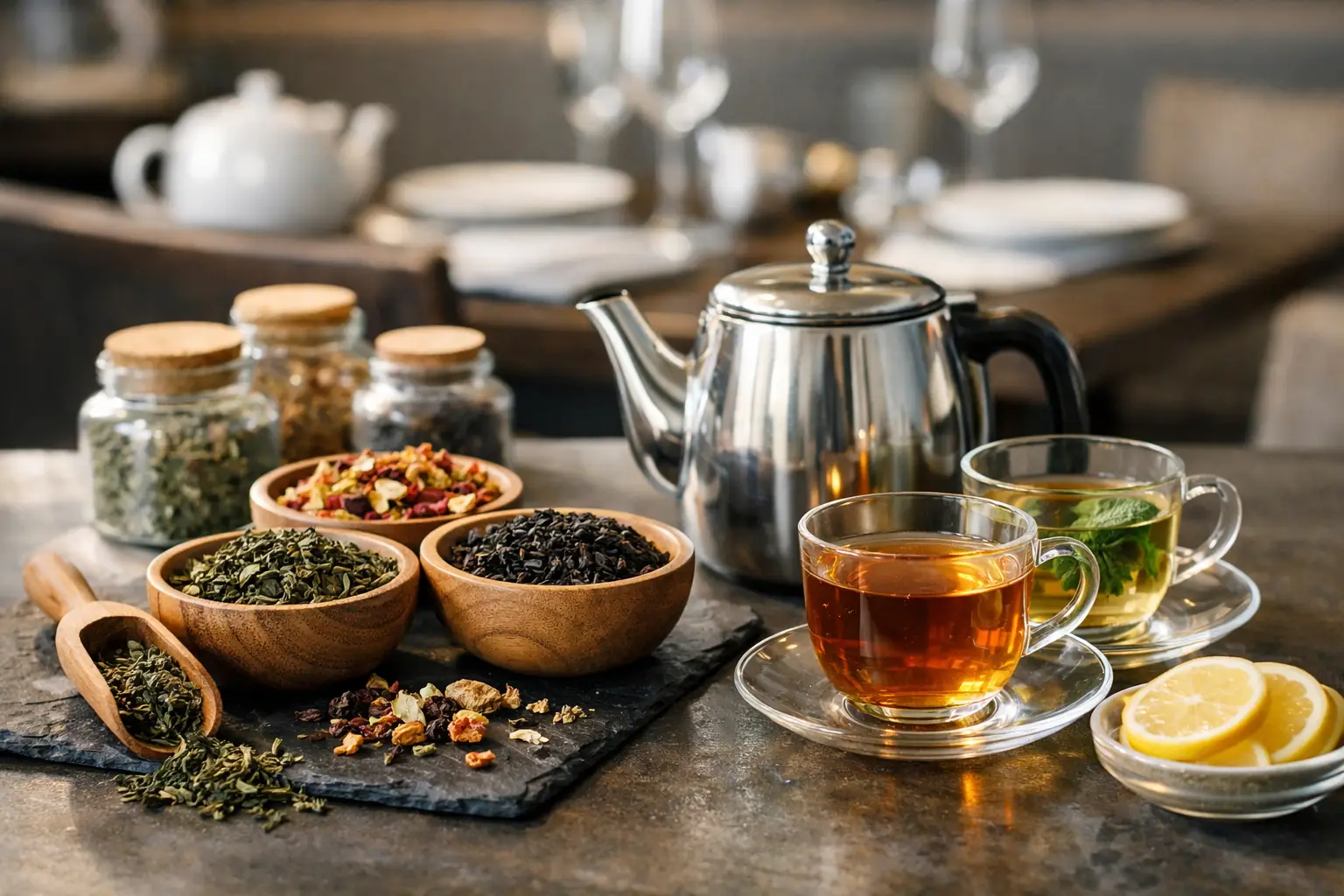
The choice of tea is not a small detail at the end of the menu. It is the last taste that remains after a meal, the quiet pause of a business meeting, the warm gesture that accompanies a dessert. A proper tea sourcing guide for restaurants It starts right there: from the realization that this beverage is not just a sachet and hot water, but part of the identity of the space.
For a restaurant that invests in its gastronomic signature, tea must have origin, purity, consistency and presence. Greek herbs, with their mountain aroma and natural intensity, can give this moment a character that cannot be replicated by an impersonal, conventional choice.
Start with the experience you want to offer
Before comparing prices or packaging, define the place of tea in your own service. An all-day restaurant has different needs than a fine dining table, a boutique hotel or a fish tavern with an emphasis on local ingredients. The right procurement is not based on a universal list of codes. It is based on consistency.
If your cuisine highlights the Mediterranean, a concoction with mountain tea, sage, mint or chamomile ties in organically with the menu narrative. If your audience is looking for more familiar international flavors, you also need clean, recognizable options like black or green tea. The point is not to offer everything. It is to offer what has a reason to be on your table.
A small, carefully curated card of six to eight options usually works better than a long list with no clear direction. The customer makes decisions more easily, staff is more effectively trained, and the warehouse remains under control.
Tea sourcing guide for restaurants: the key criteria
Price per serving matters, but it’s not enough. A cheap tea that leaves a weak aroma, crushed leaves, or an artificial aftertaste ultimately costs more to the restaurant’s image. Conversely, a quality selection with a clear identity can support higher perceived value and enhance the overall experience.
Raw material and purity of composition
Demand to know exactly what you are serving. The name of a blend is not enough. Look for distinct ingredients, natural flavors where used, and herbs with pure origin. For Greek herbal teas, geographical and botanical identity is an asset worth communicating.
Organic herbs add another layer of credibility, especially to label-reading and conscious-choosing audiences. But it's not just a phrase on the menu. It needs to be accompanied by real quality in the cup: pure color, recognizable aroma, and lasting flavor.
Serving format and ease of service
Loose tea offers ritual and flexibility, but it requires measuring, filters, time, and rigorous training. In a restaurant with a low order volume and staff who can devote attention to ritual, this solution has appeal.
Tea pyramids, on the other hand, combine convenience with visual presence and allow herbs or larger pieces of leaves to develop properly in the water. For HORECA, this balance is often crucial: consistent result, fast execution and less margin for error during peak hours.
Also consider the packaging material. Biodegradable pyramids are not only a more responsible choice. It's a detail that speaks to the expectations of the modern guest, especially when the restaurant is already investing in local sourcing and fewer unnecessary ingredients.
Supplier reliability
The best recipe loses its potency when a code is unavailable. Check delivery consistency, minimum order quantities, shelf life, storage conditions, and the supplier's ability to accommodate seasonal increases.
You also need clear specifications for each product: recommended water temperature, extraction time, dosage and presentation. These details are the link between a good raw material and a perfect result.
Build a card that has rhythm
The most functional tea card doesn't try to cater to every possible preference. It creates a journey. It starts with familiar choices, opens up space for botanical discoveries, and gives the customer a refreshing alternative for the warmer months.
A balanced proposal might include a black tea for those who want intensity, a green for a more herbal character, a chamomile for its timeless familiarity, and two or three Greek infusions with a clear personality. Mountain tea deserves a special place, not as a tourist stereotype, but as a fine Greek raw material with a fine, bright profile.
The cold version is just as important. Many restaurants let the non-alcoholic program run out of sodas and common iced teas. A premium herbal ice tea, based on real herbal extracts and not on a vague sweet taste, gives another dimension to the non-alcoholic option. It goes well with lunch, works as an aperitif and responds to the growing demand for drinks with character and a cleaner composition.
Staff training turns the product into an experience
The waiter doesn't need to be a tea sommelier. He or she does need to be able to describe each selection with a true and specific sentence. "It's Greek mountain tea with a clean, mild herbal aroma" is much more useful than "it's a nice infusion.".
The team needs to know the extraction time and not let the product overextract by the time it reaches the table. They also need to know which vessel brings out the drink, when to offer honey or lemon and when these alter a carefully built flavor character.
Presentation counts. A clean teapot, the right cup, discreet information about the herb and, where appropriate, a brief explanation of its Greek origin. These are low-cost moves that significantly increase perceived value.
Measure performance without sacrificing quality
The supply must be commercially viable. Calculate the cost per serving along with side dishes, utensils, labor and potential losses. Track which codes are moving seasonally and which are staying in the warehouse longer than they should.
But don’t be quick to dismiss a particular selection just because it doesn’t have the volume of chamomile. A distinctive Greek blend can act as a differentiator, impress visitors from abroad, and give staff a story worth telling. Performance isn’t just measured in pieces. It’s also measured in memory.
Tea Odyssey expresses this logic with Greek organic herbal infusions in biodegradable pyramids and premium herbal ice tea that bring mountain tea to a modern, ready-to-serve form. For restaurants that want the their choice to have origin and aesthetics, this approach is not just another category of beverages.
In the end, the right tea doesn't demand all the attention. It's enough to make the guest stay at the table a little longer, notice the aroma, remember a place. And that's perhaps the most refined criterion for any purchase.


