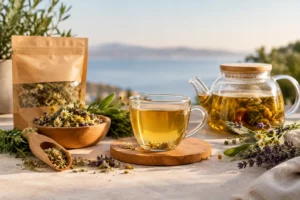
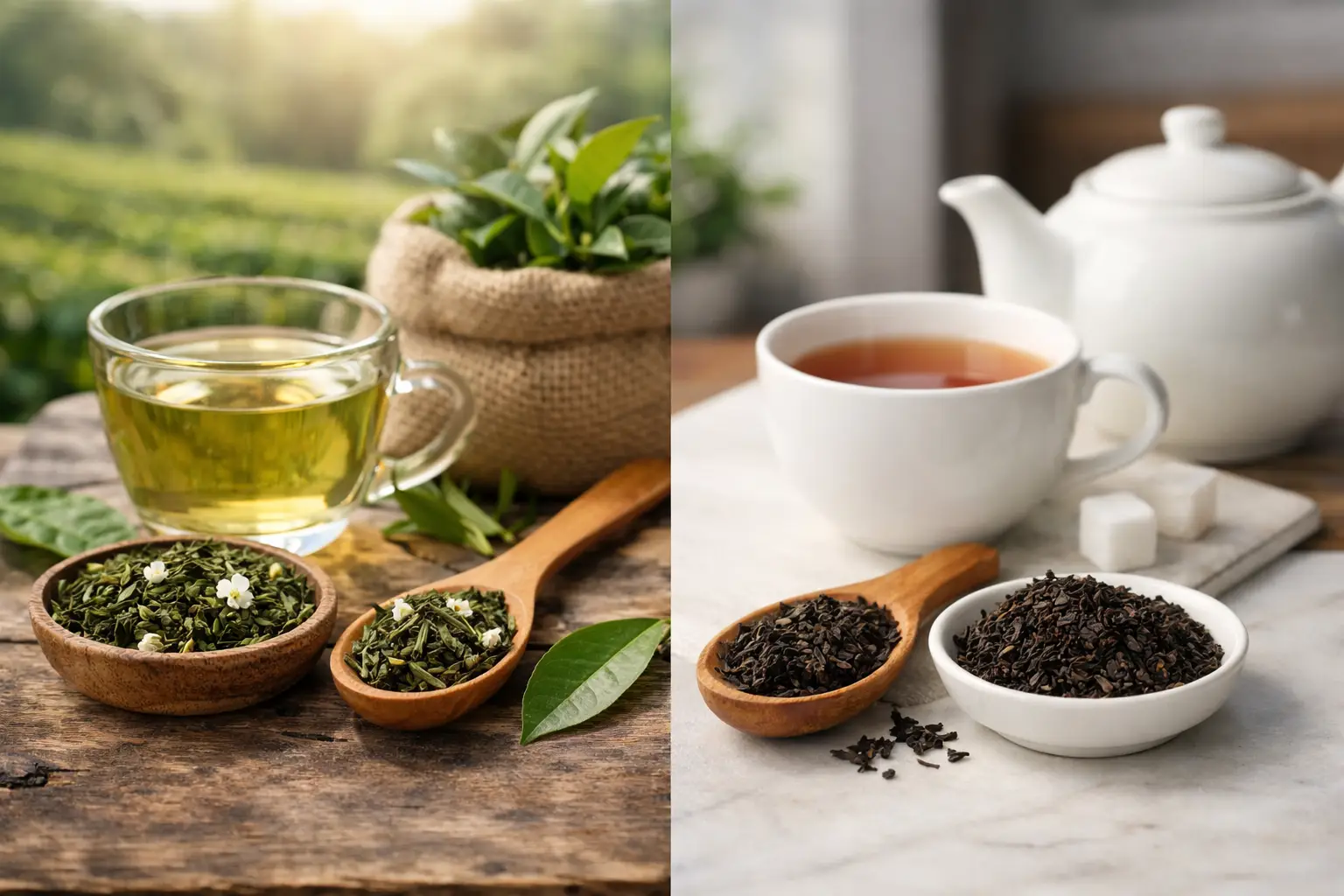
The leaf, the flower and the fruit are not simple raw materials. They hold within them a place, a time, the way they were cultivated and the care they received before reaching the cup. That is why the question organic or conventional tea It's not just about a label. It's about the kind of experience you want to choose, from the first aromatic note to the last sip.
For those looking for cleaner compositions, Greek origins and a taste with character, the difference is worth examining without exaggeration but with attention to detail. Because organic is not automatically synonymous with perfection, just as conventional is not a single category. Quality is born from many decisions: the field, the harvest, the drying, the standardization and, ultimately, the transparency of the producer.
Organic or conventional tea: the difference begins in the field
Organic farming follows a certified framework of rules for soil management, plant nutrition, and weed or disease control. It does not allow the use of synthetic pesticides and fertilizers in the way that they can be used in conventional agriculture. Instead, it emphasizes practices such as enhancing the natural fertility of the soil, crop rotation, and permitted plant protection methods.
In conventional farming, the arsenal available is different and often broader. This can make it easier to manage high yields or difficult growing conditions. However, this does not mean that all conventional tea is the same or that every producer works with the same degree of care. There are growers who choose responsible practices, even when they are not organically certified.
The essential difference lies in the verifiable commitment. The organic product label is not an aesthetic statement. It requires controls and certification at stages of the production chain. For the consumer, this creates a clearer traceability framework. For the producer, it requires consistency, documentation and patience.
Taste is not judged only by certification
An organic herb can be aromatic, deep and vibrant. But it can also be bland if it was harvested late, stored poorly or left exposed to light and moisture for too long. Similarly, a conventional tea can offer an excellent aroma when it comes from careful raw materials and has undergone proper processing.
Certification is primarily about the method of production, not a guarantee that every batch will thrill the palate. The flavor is built by the microclimate, the altitude, when the plant is cut, how carefully it is dried, and how it is combined with other ingredients. In Greek herbs, this path is particularly evident: mountain tea, sage, verbena, and chamomile have their own voice when the raw material maintains its purity and freshness.
That’s where the value of reading beyond the big word on the packaging comes in. Look for clear references to the origin, plant species, and ingredients. When a product talks vaguely about flavors but doesn’t explain what’s actually in it, the experience is likely to be less authentic than it promises.
In the decoction, purity is seen
A quality herb doesn't need to hide behind excessive aromas or sweeteners. It provides natural color, an aroma that develops, and an aftertaste that doesn't become flat. This applies to both a hot cup and an herbal iced tea, where balance is more demanding.
For ready-made iced drinks, it’s worth looking at whether the recipe is based on real herbal extracts or mainly water, sugar and flavourings. The word «tea» on the front of a package is not enough on its own. The identity of the drink is revealed in the list of ingredients and the intensity of its botanical presence.
What does organic selection mean for the environment?
Organic farming is based on the philosophy of caring for the soil and reducing dependence on synthetic inputs. In herbal crops, where the plant is consumed almost as is as an infusion or decoction, this approach takes on particular importance for many consumers.
However, the environmental value of a tea does not end with certification. The distance of transportation, the origin, water management, the form of packaging and the possibility of recycling or composting all contribute to the final picture. An organic product that travels without measure or is encased in unnecessary layers of plastic never ceases to raise questions.
The most mature choice combines criteria. Organic raw material, where available and certified. Close and clear origin. Packaging designed with less burden on the environment. And above all, a product that you will truly enjoy, so that it does not remain forgotten in the cupboard.
How to choose tea with substance
The label is the first starting point. If you choose organic, look for the relevant certification and not just phrases like «natural» or «inspired by nature.» These terms can describe an aesthetic, not necessarily a controlled cultivation practice.
Then, pay attention to the composition. For an herbal infusion, a clear statement of the plant and its origin says more than a catchy name. For a blend, the balance of ingredients needs to be legible. The more recognizable the ingredients, the easier it is to understand what you are drinking.
The form of the raw material also matters. Whole or larger pieces of herbs often retain their aromatic identity better than powder or overly crushed leaves. A biodegradable pyramid, for example, offers herbs the space to grow in water and express their character more clearly.
Finally, trust your senses. The packaging should protect the contents. The aroma, once you open the sachet or container, needs to be clean and recognizable. And in the cup, the drink should have a reason for being: reminding you of a mountain, a garden, a path among aromatic plants.
Greek origin as a quality criterion
For Greek herbs, origin is not an abstract indication on the back of the package. It is part of the flavor. The country's topography, intense sunshine, mountainous terrain and winds shape plants with a distinct aromatic imprint.
The mountain tea is a typical example. Its simple, earthy aroma does not need to be disguised. When selected based on origin, seasonality and careful standardization, it becomes a beverage with cultural memory but also a modern place on the table, in the office or in the hospitality of a hotel.
This exact path lies at the core of Tea Odyssey: Greek organic herbs, with an emphasis on mountain tea, in compositions that do not treat the infusion as a cheap alternative, but as a small ritual of quality.
The choice that suits your everyday life
If your main criteria is a certified farming environment with limited synthetic inputs, organic tea is the natural direction. If you are looking for a specific rare tea or herb that is not available organic, the conventional option does not have to be automatically rejected. It just requires more attention to the origin, the producer and the purity of the composition.
The best question isn’t just «organic or conventional?» It’s «who grew this plant, how did they care for it, and how clearly does it tell me its journey?» When tea can answer with transparency, your cup gains more than just flavor: it gains place.