Summer doesn’t have to dilute the flavor. A cold infusion can keep the aromatic intensity of a Greek herb, the clarity of its character, and that small pause that turns a drink into a ritual. It’s enough not to treat it as just “something cold”.
For years, the category of cold tea was associated with intense sweetness, artificial flavors, and a taste that’s forgotten before the glass is empty. The infusion follows a different path. It starts from the raw material, respects the extraction time, and lets the herbs speak with clarity. It’s a more substantial proposal for home, office, hotel table, or a restaurant menu that wants to stand out.
What makes a cold infusion truly special
The difference begins long before the ice is added. A quality infusion is based on recognizable plant ingredients and not on an indefinite flavor of “herbs”. When mountain tea, sage, lemon verbena, chamomile, or dittany have the right origin and careful processing, they bring their own place to the cup – or glass.
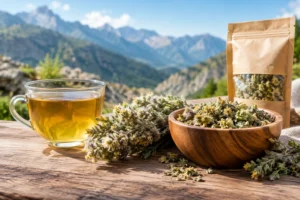
Mountain tea, with its warm, earthy, and discreetly floral profile, has a special place in this journey. It doesn’t need to be covered. It needs space. Low or balanced sweetness, clear extraction, and proper serving allow its notes to remain present even when the drink is cold.
Temperature changes the way we perceive taste. Cold restricts the sensation of sweetness and softens some aromas. That’s why an infusion that’s enjoyable hot doesn’t automatically become interesting when it’s frozen. The recipe needs balance: enough intensity to withstand the ice, but not so much that it becomes bitter or heavy.
Extraction is the beginning of the journey
The most common failure in homemade cold infusion is haste. The logic of “making a hot drink and filling it with ice” often leads to a diluted taste. On the contrary, preparation requires intention.
Hot extraction is the right choice when looking for a fuller aroma and immediate result. We use a smaller amount of water than we would for a hot drink, let the herbs extract according to their character, and then cool the infusion gradually. First, it comes to room temperature and then to the refrigerator. The ice is added just before serving, so that dilution doesn’t become a basic ingredient of the recipe.
Cold extraction offers a different experience. The herbs remain in cold water for several hours in the refrigerator and give a more delicate, clear, and often more floral result. It’s not always the ideal method for every mix. Herbs with delicate notes and less bitterness are often highlighted, while more robust raw materials may need heat to deliver all their depth.
The right choice, therefore, depends on what we want to highlight. For intensity and a more structured character, hot extraction has an advantage. For a light, clear, and summery feeling, the cold method has its own charm.
A simple ratio for a good result
For an infusion that will be served with ice, start with about twice the intensity you would choose for a hot drink. This doesn’t mean excessive extraction time, because that’s where bitterness appears. It means better herb-to-water ratio.
If you want sweetness, add it while the infusion is still lukewarm. A little honey, petimezi, or a discreet syrup can bind beautifully with mountain tea and lemon verbena. The keyword is “a little”. The goal is not to resemble a soft drink, but to maintain its botanical imprint.
From the glass to the table: the details that matter
Water is often the invisible protagonist. Water with intense flavor or very high hardness can dull the aromatic notes of the herbs. Clean, neutral water allows the recipe to express itself as designed.
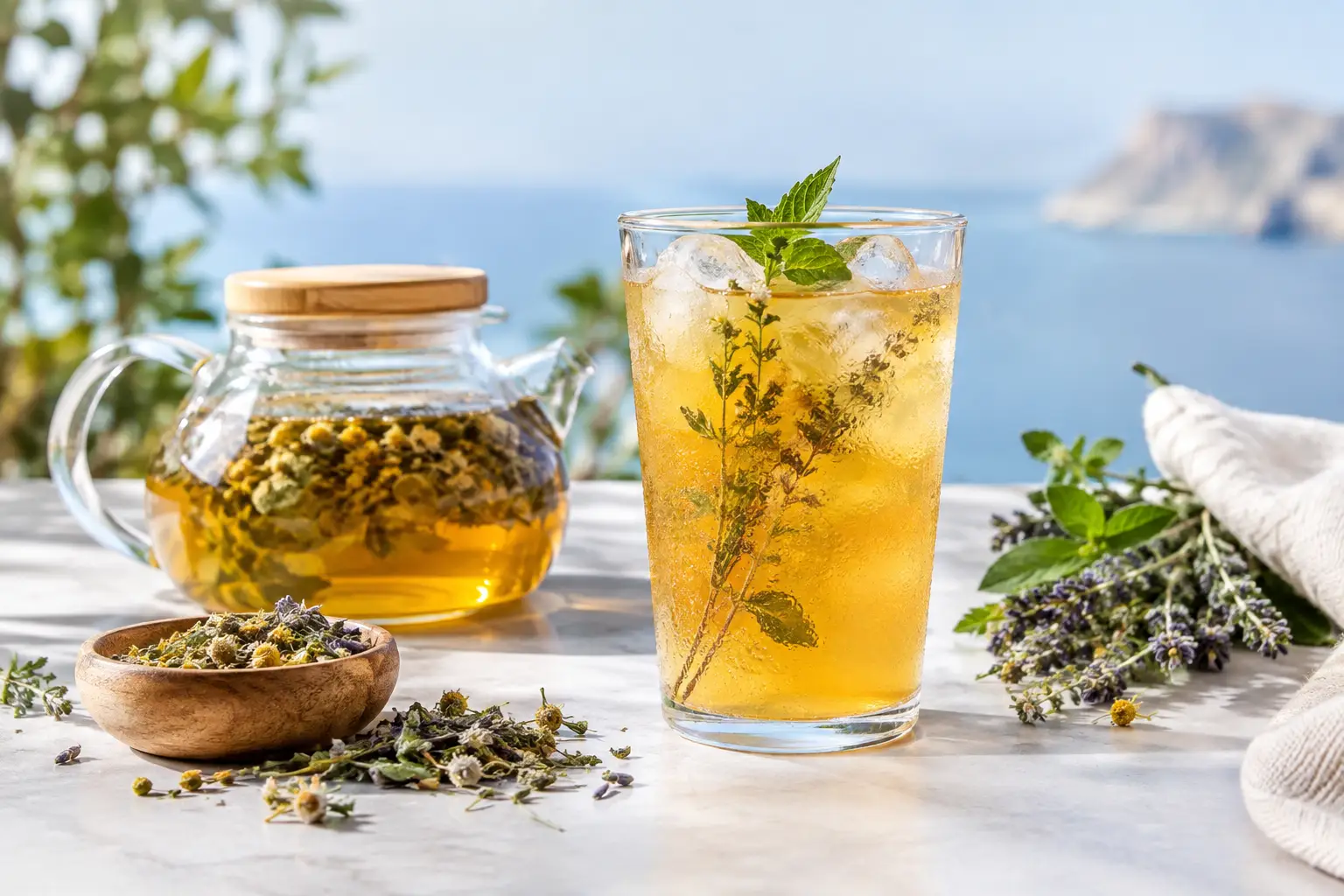
The ice also matters. Large, compact ice cubes melt later and help the drink maintain its structure. If the glass is already chilled, even better. These are small moves that show care, whether you’re preparing a glass at home or serving a guest in a premium hospitality space.
Garnishes need measure. A thin slice of lemon can illuminate a mix with lemon verbena. A sprig of fresh mint gives freshness. A little orange peel accompanies more full, melodic profiles nicely. But when the glass is filled with fruits, syrups, and intense spices, the infusion loses its voice. The best presentation is the one that highlights, not competes.
Ready herbal ice tea or homemade preparation;
There’s no one answer for every moment. Homemade preparation offers the satisfaction of the process and the freedom to adjust intensity, sweetness, and serving. It’s ideal for those who want to experiment with organic herbs and give a personal touch to their hospitality.
Ready premium herbal ice tea, on the other hand, has value when consistency is desired. In the office, on a trip, in a store, or in a HORECA space, quality must be available without waiting and without discounts on taste. The substantial difference lies in the label and the product’s philosophy: real plant extraction, clean composition, balanced sweetness, and recognizable origin.
Here, Tea Odyssey’s approach stands out: Greek herbs don’t function as decorative references but as the core of the experience. The selection of recipes with an emphasis on mountain tea transfers the knowledge of the Greek land into a modern, ready-to-enjoy form. It’s a different proposal from conventional cold teas, where taste often relies more on aromatic impression than authentic raw material.
The new position of infusion in everyday life
Cold infusion fits more moments than we usually give it. It can stand as a refined welcome in a hotel, as an alternative option next to coffee, as a companion to a light lunch, or as the calm pause of a warm afternoon. Without caffeine, where the composition allows, it can cover those who desire a milder option during the day.
For hospitality, its value is double. It offers a character that’s not easily copied and gives a reason for storytelling: Greek herbs, clear taste, modern aesthetics. For the consumer, the value is more direct. They know what they’re choosing and feel that coolness wasn’t bought at the expense of quality.
A good cold infusion doesn’t need to impress with noise. It’s enough to leave a clear, aromatic memory at the end – like a short stroll on a Greek hillside, in the brightest part of summer.