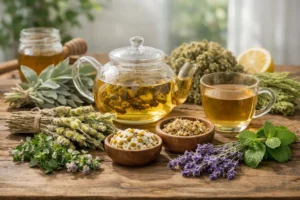
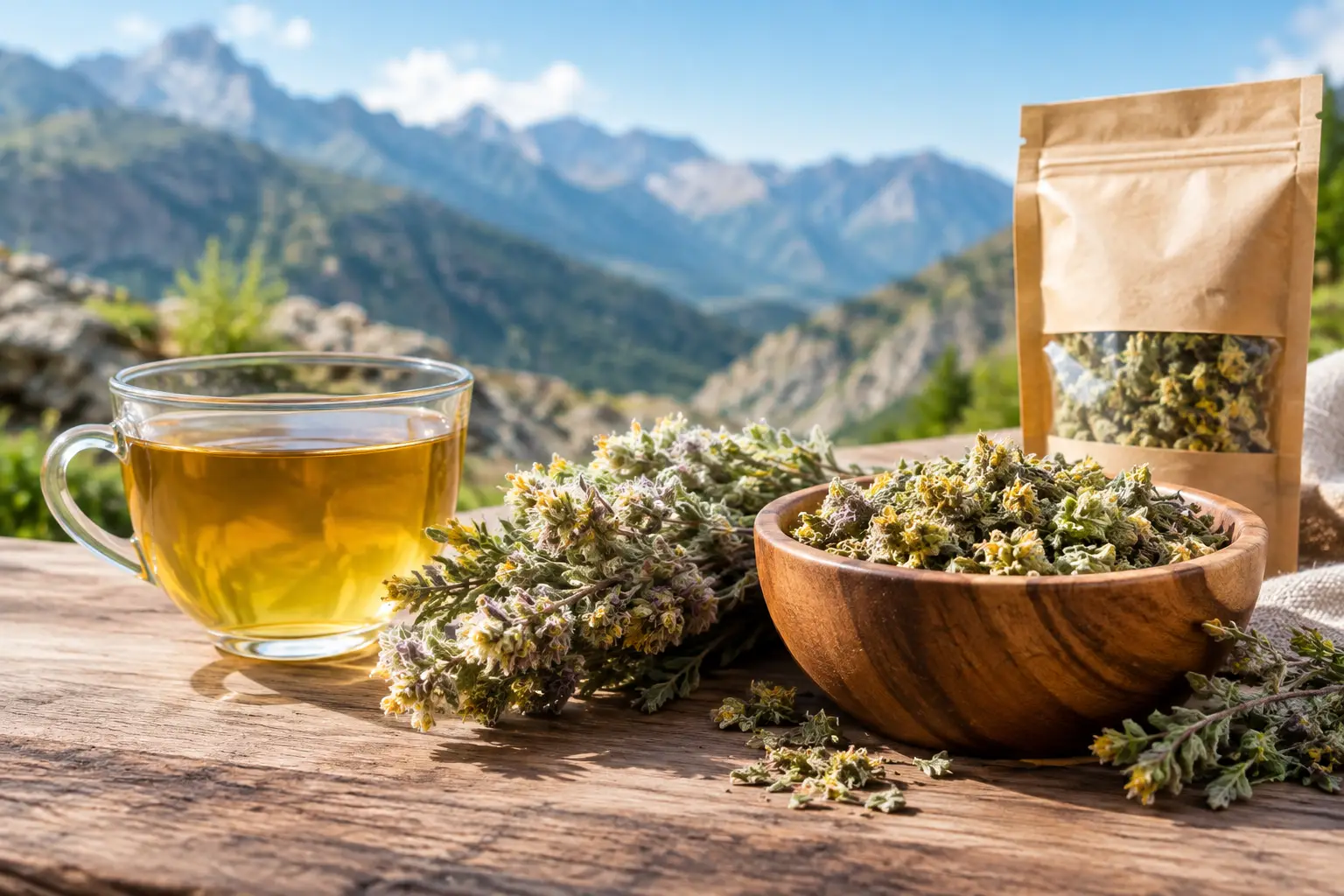
Mountain tea is not just another hot beverage sitting in your cupboard. It is the memory of a Greek landscape: sunshine, stone, clean air, and aromatic plants that grow at their own slow pace. When you wonder how I choose mountain tea, the answer is not found only in the color of the box or in an appealing name. It lies in the origin, in the care of cultivation, and in the transparency that accompanies every leaf and flower.
The right choice begins with a simple thought: do you want a product that merely resembles a mountain, or an infusion that truly conveys its character? The difference shows in the aroma, in the taste, in the clarity of the cup, and ultimately, in the experience.
How I choose mountain tea from its origin
Greek mountain tea belongs to the Sideritis genus, a plant deeply connected to the mountainous regions of the country. However, there is no single “mountain tea”. The variety, altitude, microclimate, and soil give different expressions to the final infusion.
An herb that is cultivated or collected in Greek mountainous areas usually has a cleaner botanical identity than an anonymous blend of uncertain origin. Look on the packaging for specific information: Greek origin, type of herb, cultivation or collection site, and, where available, organic certification. The more clearly the product tells you about its journey, the easier it is to trust it.
Organic cultivation is not merely an indication on the packaging. It expresses an approach that respects the plant, the soil, and its time. For an herb that is meant to reach your cup almost as it is, this care matters.
The season of harvest leaves its mark
Mountain tea is harvested when the plant is at the right stage of flowering. Then the flowers, leaves, and tender shoots retain their aroma and natural intensity. A hasty or overly early harvest can produce a more flat result, while the right moment gives an infusion with subtle notes of flowers, honey, grass, and earth.
The method of drying also matters. When done carefully, it protects the plant’s natural color and aroma. A good mountain tea does not need strong added aromatic materials to draw attention. Its charm is quieter: it is recognized in the fine, clean finish.
Look at the herb before tasting it
The appearance of the contents is one of the most immediate signs of quality. In loose form, prefer visible pieces of plant with flowers, leaves, and fine shoots. The herb does not need to be impressively large, but it should not look like unknown powder or overly crumbled material.
Very fine cutting can quickly release intensity, but often lacks the gradual development of aromas in the drink. In contrast, whole or carefully cut parts of the plant leave more room for the infusion to breathe. It is a small detail with a big difference, especially for those who frequently drink mountain tea and know its taste.
In tea pyramids, quality shows differently but equally clearly. A wide pyramid allows the herb to open in the water and release its character. The choice of biodegradable packaging adds another criterion: enjoying a Greek herb gains greater value when it does not leave behind unnecessary environmental burden.
Aroma is the most honest guide
Open the packaging and stand for a moment in the aroma. A fresh mountain tea has a lively, clean, and natural scent. It should not be overwhelming, dusty, or reminiscent of a storage room. Nor does it need to be overly fragrant. Intensity does not always equate to quality.
In the cup, look for a soft golden hue and a balanced taste. Good mountain tea does not seek to dominate aggressively. It has a delicate character, with botanical clarity and a pleasant, almost velvety sensation. If it turns bitter quickly, it does not necessarily mean it is of poor quality – it may have steeped too long or been prepared at too high a temperature.
Taste, after all, is a personal matter. Some prefer a more floral and light infusion, others a fuller, earthier expression. That is why it is worth trying different Greek origins rather than searching for a single “correct” version.
Read the composition, not just the front
The label should help you understand what you are drinking. For an authentic mountain tea experience, look for products where Sideritis plays the leading role. Blends with other herbs can be excellent, as long as they honestly declare their composition and follow a clear flavor idea.
Mountain tea pairs beautifully with lemon, honey, mint, fennel, or chamomile. In a carefully crafted blend, however, each ingredient needs its space and reason for being. When additions are too many or aromatic materials cover the herb, the sense of place is lost.
It is also worth remembering that, although we call it “tea”, it is an herbal infusion and not black or green tea from the Camellia sinensis plant. This distinction is useful for those seeking a caffeine-free drink, and for those who want to better understand its different flavor language.
The packaging protects the herb’s journey
A selected herb can lose its strength if stored improperly. Light, moisture, and air gradually alter the aromas. Choose packaging that protects the contents and seals properly after use. At home, keep the tea in a cool, dry cupboard, away from strong-smelling spices or coffee.
For hospitality spaces, cafes, and restaurants, packaging has a dual role. It must preserve the product perfectly and offer an experience worthy of the serving moment. A well-designed pyramid with visible herb is not just practical. It is a small ceremony that makes the visitor feel they are tasting something with origin and intention.
Hot or cold, the criterion remains the truth of the raw material
Mountain tea is traditionally drunk hot, but its clean taste can work excellently cold as well. For homemade cold tea, prepare a slightly stronger infusion, let it cool naturally, and add ice just before serving. A bit of lemon zest or a sprig of mint suffice – it does not need to be turned into a sweetened drink to be enjoyable.
In ready-made herbal ices, the consumer needs to look beyond the image of a leaf or a mountain on the label. The essential question is whether the drink is based on a real herbal extract, whether its composition remains clean, and whether its taste lets the Greek plant speak. There is where a premium herbal beverage is distinguished from a conventional iced tea with weak herbal presence.
Tea Odyssey treats Greek mountain tea as the protagonist of this journey: from organic herbs and biodegradable pyramids to premium herbal ices that give the infusion a modern, ready-to-enjoy form.
A simple preparation reveals quality
To fairly judge a mountain tea, give it the proper preparation. Use clean water that has just boiled and let the herb steep for about 5 to 8 minutes. For a more subtle result, reduce the time. For a fuller body, slightly increase the amount of herb rather than leaving it too long in the water.
Try it first plain. That way you will sense its true quality. Honey and lemon can accompany it wonderfully, but it is better for them to act as light touches rather than a cover.
The right mountain tea does not need to convince you with grand promises. It is enough for it to give you a clean moment, with the aroma of Greek earth and a taste that lingers in the mouth with natural calm. Keep this measure for your next choice: the more genuinely the product seems to know where it comes from, the more beautifully it will take you on a journey.