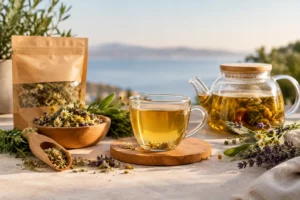

A cup of mountain tea does not try to impress with intensity. The flavor of mountain tea has a rarer way of lingering in the memory: it begins subtly, with aromas of dry fields, wildflowers, and fresh herbs, and ends clean, gently sweet, almost sunlit. It is the taste of a Greek landscape that does not need much to speak.
For those accustomed to heavy herbal infusions or iced teas dominated by sugar and artificial flavors, the first encounter may seem calm. Yet it is precisely this calmness that is its value. Mountain tea does not overwhelm the palate. It leaves room for the raw ingredient, the harvest season, and the care of preparation to reveal themselves.
How is the flavor of mountain tea described?
Greek mountain tea, known botanically as Sideritis, does not have the astringency (caused by tannins) of black tea or the grassy, sharper character of green tea. In the cup, one finds a botanical profile with a soft earthy base, notes of honey, chamomile, and dried flowers. Depending on the variety and the place where it grew, it may have a lightly lemony freshness or a warmer, almost peppery sensation.
Its flavor is not flat. At first, it often seems light and full of floral notes. Then the more characteristic mountain notes emerge: dried herbs warmed by the sun, a subtle minerality from the soil, and a delicate sweetness reminiscent of flowers rather than syrup. The finish remains clean, without the astringency that other types of tea, such as black and green tea, can leave because of the tannins they contain or when they are steeped for too long.
This purity also explains why mountain tea is so versatile. It is enjoyed hot when we seek a slow, quiet moment, but it translates just as beautifully into a glass with ice. There, rather than losing its character, its botanical freshness takes on another dimension.
It Is Not Just One Flavor
The term “mountain tea” describes an entire world of Greek species and places. Altitude, sunshine, soil composition, harvest time, and drying method all alter the nuances of the final infusion. A tea from mountainous, drier regions may be more concentrated and earthy. Another, from places with different humidity and flowering, may offer lighter floral aromas.
This is not inconsistency. It is IDENTITY. As with wine or extra virgin olive oil, origin is not merely a piece of information on the packaging. It becomes part of the flavor. The raw material from a specific Greek landscape bears its own signature, provided it has not been flattened by excessive processing or overshadowed by added aromas.
From Mountain to Cup: What Determines the Result
The quality of mountain tea is determined long before the water boils. Harvesting must be done with respect for the plant’s natural cycle, when the flowers and leaves have developed their aromatic richness. Then gentle drying is crucial: it preserves the essential aromas that make an infusion smell alive rather than dusty.
The appearance of the herb itself also says a lot. Whole stems, flowers, and leaves usually provide a cleaner, more layered extraction than an overly crushed blend. Very fine cutting may produce color quickly, but it does not guarantee depth, clarity, or lasting flavor. In premium infusions, time works in favor of detail, not haste.
Packaging has its own silent mission. It protects delicate aromas from moisture and light, while a biodegradable pyramid gives the larger pieces of herb room to open up in the water. It is a small difference that can be felt in the cup: more aroma, a more natural development, and less of a dusty impression.
Proper Preparation Lets the Herb Speak
Mountain tea is generous, but it is not indifferent to how it is prepared. Just-boiled water and a few minutes of steeping are enough to bring out its profile. If you let it steep for about 5 to 7 minutes, you will get a balanced character, aromatic and gentle. For a fuller extraction, especially if you plan to serve it over ice, you can extend the time slightly.
It does not need a sweetener added to be enjoyable. If you want to enhance its natural sweetness, a small amount of honey can sit harmoniously alongside its floral notes. Lemon adds brightness, but changes the original profile. It is ideal when you are looking for freshness, but less so when you want to experience the herb’s clean, authentic flavor.
In its cold version, balance becomes even more important. A true herbal iced tea needs to be based on a genuine herbal extract, rather than relying solely on sweetness and added flavorings. The difference is immediately apparent: the first leaves the impression of a refreshing infusion, while the second often resembles a sweet soft drink that has simply borrowed tea’s name.
Hot or Iced?
Served hot, mountain tea emphasizes warmth, earthy notes, and the delicate note of its flowers. Served iced, it brings out its freshness even more and becomes a clean companion for meals, work, or hospitality. There is no better version – only the version that suits the moment.
At a breakfast table, it can accompany bread with honey, fruit, or a light dessert. In a restaurant, a carefully prepared iced mountain tea offers a Greek alternative to predictable choices. In a hotel, it turns the welcome drink or breakfast into a small gesture rooted in place and care.
The Value of Authenticity in Modern Enjoyment
The return to Greek herbs is not nostalgia. It is a choice of flavor, origin, and quality. Modern consumers seek beverages with a clean composition, a distinct character, and a story that has not been invented. Mountain tea naturally has all these elements. The challenge is for it to reach the glass without losing its voice.
tea Odyssey highlights this journey, treating Greek herbs not as a picturesque reference, but as a raw material with international gustatory prestige. Careful selection, an organic direction, contemporary presentation, and an emphasis on genuine botanical extract give mountain tea the place it deserves: not on the margins as something “traditional,” but at the center of a modern premium experience.
The next time you try it, don’t rush to compare it with something else. Let the aroma come first, hold a sip in your mouth a little longer, and notice what it reveals. Some landscapes do not need a map for you to travel through them – all you need is a good cup.