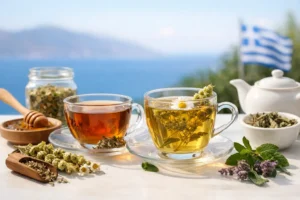

Mountain tea doesn't need intensity to speak. It needs space, clean water, and the right temperature. This mountain tea temperature guide starts from a simple truth: when the water is too aggressive or the extraction is unnecessarily prolonged, the delicate aromas of the Greek earth fade beneath a flat, often bitter, taste.
Proper preparation is a small ritual of precision. It brings out the floral, honeyed and earthy notes shades of siderite, without covering them. And it turns a daily cup into a peaceful wander on the slopes where the herb is born.
The ideal temperature for mountain tea
For a balanced cup, aim for water 90-95°C. In this temperature zone, mountain tea releases its aromatic character with purity and natural sweetness, while maintaining its fine botanical structure.
If you don't have a kettle with a temperature indicator, boil the water and let it stand for about two minutes with the lid open. This is usually enough to get the first, wild rush of a full boil out and get the water to a more suitable point for extraction.
Temperature is not an absolute rule independent of the raw material. A whole, more woody piece of siderite can withstand water close to 95°C. A fine biodegradable pyramid with more finely chopped leaves, flowers and tender parts of the plant often expresses itself best at 90-92°C. The difference of a few degrees is small on the thermometer, but noticeable in the cup.
Why not always at 100°C?;
Boiling water does not destroy mountain tea. In fact, it can be the right choice when you want a thicker, more traditional brew, especially with whole sprigs. However, prolonged contact with water at 100°C can give more weight to the woody and herbal elements, limiting the clarity of the aromas.
In other words, 100°C is not wrong. It is a choice of style. For a strong, wintery drink, with body and length, they work well. For a more refined result, where aroma, purity and an elegant aftertaste come first, 90-95°C is the safest route.
Mountain tea temperature guide and brewing time
Temperature and time go hand in hand. The hotter the water, the faster the herbal elements are extracted. That's why a cup at 95°C usually requires less waiting than a cup at 90°C.
For mountain tea pyramids, start with 4-5 minutes of extraction. The result will be bright, aromatic and pleasantly smooth. If you prefer a deeper flavor, go up to 6 minutes. After that point, you don't necessarily gain more complexity. You may just end up with a heavier, less elegant drink.
For whole herb, the method has more room for personal interpretation. You can steep it in 95°C water for 7-8 minutes or simmer it for 3-5 minutes and then let it rest. The former method keeps the profile lighter and more floral. The latter offers a fuller body and a more intense, traditional feel.
The best criterion is taste, not persistence. Mountain tea does not reward excess. When its aroma is pure and the aftertaste lasts without drying out the palate, you have found your own balance point.
The water is half a cup.
Even the most meticulous collection of Greek herbs cannot be fully expressed with water that has a heavy chlorine smell or a strong minerality. Choose fresh, clean water and fill the kettle with only the amount you need. Water that is boiled over and over loses some of its vibrancy and can make the drink seem more flat.
The utensil also plays a role. A preheated ceramic or glass cup helps keep the temperature consistent in the first few minutes, when the actual extraction takes place. Pour some hot water into the cup, empty it, and then prepare the brew. It's a simple move that adds consistency to the experience.
Avoid utensils that hold strong smells from coffee, spices or detergents. Mountain tea has a distinctive voice. It doesn't need competition.
How temperature changes taste
At 85-90°C, the drink is often smoother, with more floral and sweet notes. This is a nice choice for afternoon consumption or for those who are new to sideritis and want to experience its mild character.
At 90-95°C, the most complete version of the herb emerges. The aroma gains depth, the body remains elegant, and the natural sweetness meets a slight earthiness. For most premium mountain tea pyramids, this is the temperature worth starting at.
At 100°C, the effect becomes more decisive. The herbal and woody notes come to the fore, while the drink can seem more warming and traditional. It is a choice that suits cold days, larger pieces of plant or recipes where tea of the mountain accompanied by honey, lemon or spices.
Adding honey doesn't have to be done right away. Let the drink cool to a comfortable drinking temperature first. This way you can first taste the pure profile of the herb and decide if it really needs sweetness. Often, a properly brewed mountain tea has enough on its own.
Hot or cold: same raw material, different route
Mountain tea has the rare ability to stand up to both hot and cold. To prepare a base for an iced drink, use water at 95°C and make a slightly more concentrated infusion, with less water or an extra pyramid. Let it stand for 5-6 minutes and then cool it quickly before adding ice.
Rapid cooling keeps the aroma cleaner. Conversely, when a hot brew sits for hours at room temperature, it loses its freshness and the flavor seems tired. For a chilled serving with character, opt for a wide glass, plenty of ice, and a thin slice of lemon only if you want to brighten the citrus notes, not cover up the herb.
Tea Odyssey treats mountain tea not as a nostalgic habit, but as a modern Greek raw material with a place on the everyday table, in design-led hospitality and in the purest enjoyment options.
Small fixes that make a big difference
If the drink comes out weak, don't increase the time first. Try a temperature 2-3 degrees higher or slightly more herb. If it comes out heavy or rough, reduce the infusion time by a minute before messing with anything else.
If you want to serve mountain tea to guests or a hospitality area, keep the process simple and repeatable: clean water, a constant temperature, the right dosage, and a cup that allows the aroma to reach the nose first. Quality needs no demonstration. It is recognized at the first sip.
The next time you heat water, don't just think about how fast it will boil. Think about where you want your cup to travel. A few degrees, a few minutes, and a good Greek vintage are enough to change the entire journey.