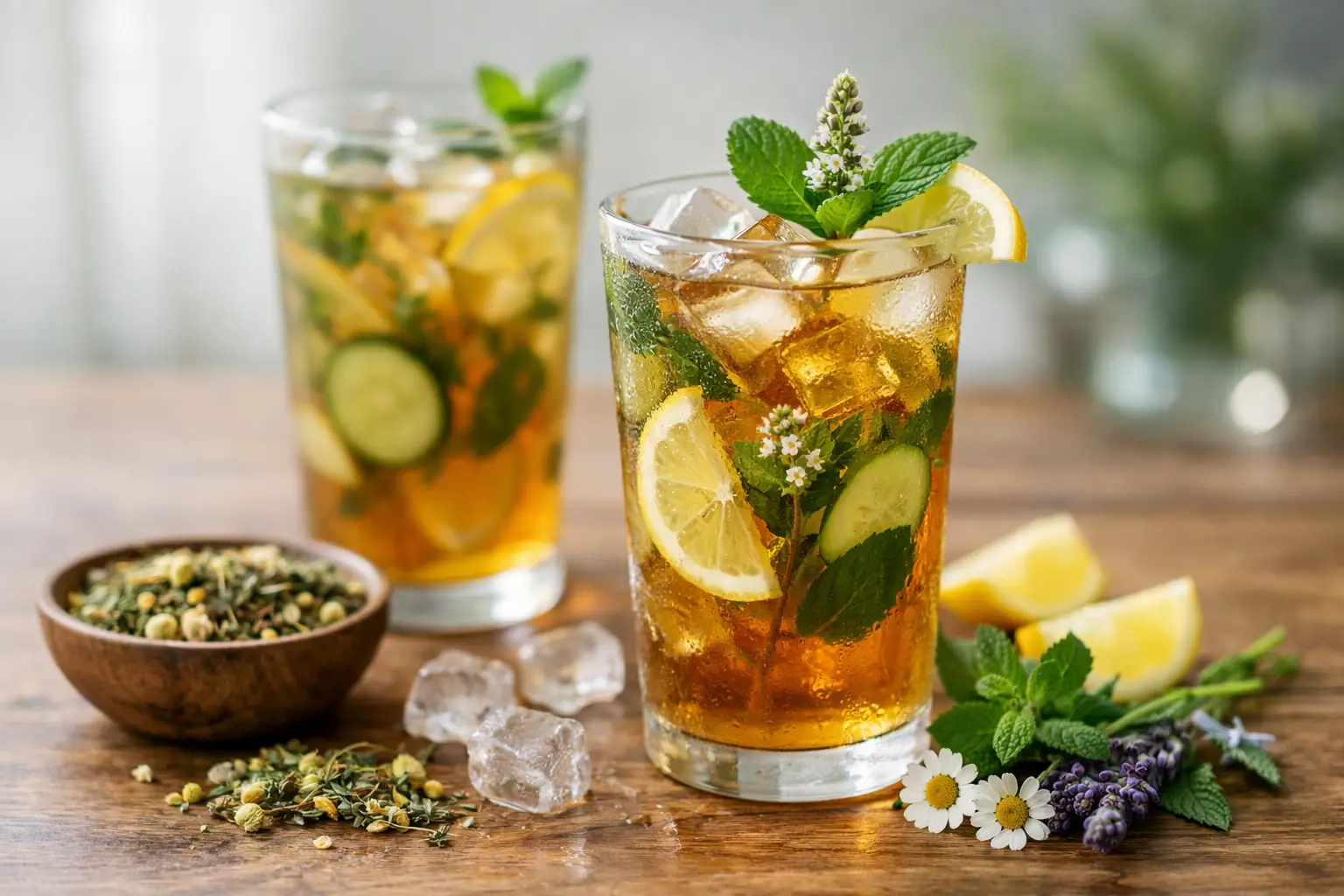
Iced herbal tea is not just a refreshing drink for the hot hours of the day. It is the moment when Greek nature meets modern pleasure, without discounts on raw materials, without unnecessary sweetness, without that industrial feel that makes so many products in the category look alike. When made correctly, it doesn't just quench your thirst. It leaves you with a memory of taste.
In practice, that's where its value is judged. If the herb is heard but not seen in the glass, if the aroma promises more than the first sip delivers, then we are talking about a simple reference to nature and not an authentic botanical experience. Truly quality iced tea does not rely on its image. It relies on the extract, on the balance, on the purity.
What makes herbal iced tea different?
The difference starts at the base. Another conventional iced tea with a vague identity and another drink built around real herbs. In the latter case, the herb is not decorative. It is the core of the taste, aroma and experience.
Especially when we talk about Greek herbs, iced tea takes on another dimension. Mountain tea, verbena, sage, chamomile or mint do not only carry flavor characteristics. They carry place, seasonality, memory, a cultural continuity that is difficult to copy. You are not just drinking something cool. You are drinking a version of the Greek landscape in a modern form.
This does not mean that every botanical profile is suitable for every use. There are lighter, brighter compositions that work ideally during the day, and there are more complex aromatic profiles that stand comfortably in a hotel breakfast, on a sophisticated café menu or alongside a light meal. Quality is also evident in the versatility.
The raw material is not a detail
In herbal iced tea, the raw material is not a technical footnote. It’s the whole story. The purer and more carefully the extract, the more natural the flavor becomes. And the more authentic the raw material, the less the product needs to hide behind excessive sugar, strong flavors, or aggressive acidity.
Herein lies the great limit of the mass market. Many iced teas emphasize sweet ease rather than real depth. They are drinks that are consumed quickly and forgotten just as quickly. They leave no trace of flavor. Only a momentary impression.
On the contrary, when the drink is based on fine Greek organic herbs, the result is precise. The nose is clean. The taste is layered. The aftertaste is not tiring. This is what distinguishes a premium proposal from a simple refreshing refrigerator option.
Why Greek herbs have such potential
The Greek terroir gives herbs intensity, aromatic purity and a special character. The sun, the altitude, the dryness of many areas and the long botanical tradition of the country create raw materials with a natural personality. You don't have to pressure them to speak. They speak for themselves.
That's why an iced drink based on mountain tea, for example, can be both familiar and sophisticated. It has roots, but it also has freshness. It reminds of tradition, but it stands completely modern. This balance is rare and precious.
How do you know if an herbal ice tea is really quality?
You don't have to be a tea expert to tell the difference between the good and the bad. The first clue is the taste, which doesn't scream. A good herbal iced tea doesn't hit you with excessive sweetness from the start. It opens up gradually. It gives you aromatic purity, balance, and a finish that beckons you for a second sip.
The second clue is the sense of authenticity. If the drink feels like it was designed around the herb, then you know it. If it feels like it was designed around marketing, then you know it too. The difference is simple but crucial.
There is also a practical indicator that is often underestimated: the clarity of the composition. The clearer and more focused it is, the easier it is to discern the quality of the base. This does not mean that every short composition is automatically superior. But it does mean that a good product does not need babble to convince.
From home to HORECA, the same drink changes level
The charm of this category is that it works in many environments without losing its identity. At home, a premium herbal iced tea can become the clean alternative to soft drinks and sugary drinks. It is more refined, milder, closer to a conscious way of drinking.
In the hospitality industry, its importance becomes even greater. A hotel, a café or a restaurant doesn’t just serve a cold drink. It serves aesthetics, a narrative and a position on quality. When iced tea has an authentic botanical identity, it becomes part of the experience of the space. It doesn’t just complement the menu. It elevates it.
There, of course, consistency is needed. The premium image is not enough if it is not accompanied by a consistent taste result, proper packaging and clear differentiation from banal options. That is why professionals looking for real added value turn to proposals with product discipline and a strong identity, such as those that Tea Odyssey has developed around Greek herbs and herbal ice tea.
Modern consumer choice is not just a matter of taste
Today, the informed consumer demands more. They want to know what they are drinking, where it comes from, how it was produced and whether the promise on the packaging lives up to its content. Premium is not just a matter of aesthetics. It is a matter of consistency.
That is why sustainability, organic farming, careful standardization and respect for the raw material play an increasingly essential role. They do not function as decorative elements of a brand story. They are part of the quality. And in a category that has seen great confusion between the natural and the merely seemingly natural, this consistency counts for a lot.
Premium doesn't mean exaggeration
There's an old misconception that premium drinks have to be heavy, complex, or pretentious. In fact, the refined product is often the purest. It doesn't seek to impress with noise. It opts for precision.
This is absolutely true for herbal iced tea. The point is not to add more and more notes. The point is to properly compose the right notes. That is where the maturity of a recipe is judged.
Why herbal iced tea has a future
The rise of the category is no coincidence. Consumers are moving away from one-dimensional choices and turning to drinks with more character, cleaner composition and a real story. Herbal iced tea answers exactly this need. It is cool but not shallow. Modern but not cut off from tradition.
At the same time, it gives space to something that is rare in the mass market: local identity. In an era where many products seem internationally homogenized, a beverage based on Greek herbs has a clear voice. It doesn't try to imitate. It expresses.
This makes it particularly powerful for both the end consumer and professionals who want to offer something with substance. Something that is not just refreshing, but also narratively rich. Something that can stand on the shelf, on the table, in the minibar or on the beach menu with equal confidence.
Ultimately, good herbal iced tea doesn't try to be everything to everyone. And perhaps that's its most appealing feature. It knows what it is, respects its raw material, and offers a clean, modern, rooted enjoyment. If you're looking for a drink that speaks Greek without dwelling on the obvious, that's where the real interest begins.