There is a difference between a hot cup that simply flavors water and a brew that conveys place, cultivation, and care. Organic brews fall into the latter category. They are not yet another wellness trend, but an option with noticeable flavor consistency, purer ingredients, and a deeper connection to the herb as it truly is.
For anyone looking for quality without compromise, the word «organic» alone is not enough. The value lies in the whole – in the origin, in the harvest, in the standardization, in the way the aroma is preserved and in the honesty of the final experience. That’s where the essence begins.
What does "organic herbal teas" really mean?
In its truest sense, organic farming is not just decorative information on packaging. It is a production method that respects the plant, the soil and the natural growth cycle, avoiding synthetic pesticides and practices that alter the character of the raw material. This is especially important in herbal teas, where the herb is not hidden behind intense processing.
When a concoction is made from quality organic herbs, you can tell from the first touch. The aroma is clean, not flat. The taste is long-lasting, not just intense. And the finish is clean on the palate, without that dull, bland feeling that often comes with shoddy blends.
This does not mean, of course, that every organic drink is automatically excellent. If the raw material is mediocre, if the drying process has been done hastily, or if the packaging does not properly protect the contents, the result will be the same. Organic certification is a starting point. Quality is judged in practice.
Why Greek herbs add depth
Greece not only has a rich botanical tradition, it also has microclimates, altitudes, light and dryness that give herbs greater aromatic intensity and a particularly pure profile. mountain tea, verbena, sage, chamomile, dittany and so many other plants are not just familiar. They are carriers of place.
In a premium concoction, this Greekness does not function as a romantic reference. It functions as a flavor advantage. The properly cultivated and properly standardized Greek herb does not need exaggeration to stand out. It has natural nobility, complexity and a flavor that does not shout but remains.
That is why the shift towards organic herbal teas from Greek herbs It's not just about consumers who read labels carefully. It's about people who are tired of generic, bland flavors and want something with a real identity. Something that doesn't feel like it's made for everyone in the same way.
The difference is visible in the cup
There are details that distinguish a well-crafted infusion from a merely acceptable one. The first is aromatic purity. If the herb exudes vitality even before extraction, you already have an indication that the quality chain has been maintained.
The second is its behavior in water. A good decoction opens gradually. It does not give all its flavor in the first minute nor does it run out abruptly. It has evolution. At the beginning, brighter notes, then more roundness and finally an aftertaste that confirms the quality of the raw material.
The third is balance. Quality organic herbal teas do not need excessive sweetening to be enjoyable. This is perhaps the most revealing test. When a tea is comfortably drunk neat, without requiring correction, then the composition has done its job.
Organic herbal teas and premium everyday products
There is a perception that premium is an exception. In reality, its essence lies in daily repetition. A quality beverage in the morning, at the office, after dinner or late at night is no small luxury. It is a way to restore measure, rhythm and quality to moments that usually pass in a hurry.
This explains why the category has gained particular importance for modern consumers and for hospitality venues that want to say something more substantial through their beverage selection. A good brew doesn't just fill a spot on the menu. It sets a standard. It shows whether a venue is content with the ordinary or if it chooses with an experience in mind.
In the same vein, quality is not just about the hot beverage. When the base is an authentic herbal extract and not a vague aroma, even a cold version can retain its botanical character. That's where the difference from conventional, mass-produced products is evident. Another drink with a sweet impression and another a true botanical experience that remains pure and balanced.
How to choose the right organic herbal teas
If you want to choose with more certainty, it's worth looking beyond the first word on the packaging. The origin of the herbs is key. The clearer it is, the better. General and vague terms usually don't promise anything specific.
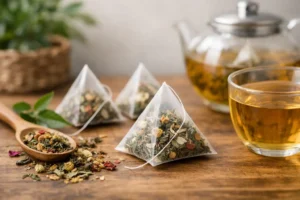
The way the product is presented also matters. Quality pyramids allow the herb to develop properly during extraction, while careful, protective packaging helps preserve aromas and freshness. When packaging combines functionality with biodegradable materials, the experience also gains a dimension of consistency. Sustainability is not a separate narrative from quality. It is part of it.
Composition also matters. A pure herbal infusion, without unnecessary additions, lets the herb do the talking. Conversely, when the recipe relies primarily on aromatic interventions, the raw material is often not enough to stand on its own.
Finally, trust your taste buds. If a brew seems flat to you at first taste, it's usually not going to suddenly reveal more depth. Quality needs no explanation. It's recognized.
The place of organic herbal teas in hospitality
In the hotel, café, restaurant or concept retail, the beverage is no longer a complementary option for a few. It is an element of identity. A professional who chooses organic beverages with a Greek character offers more than just another code. It offers narrative, quality and differentiation in a market where many things are similar.
The visitor remembers the details that were not accidental. He remembers the purity of the aroma, the feel of the raw material, the way a drink matched the space. At this level, the concoction becomes a cultural gesture. A calm way of saying that the Greek land still has things to tell, as long as you give it the right form.
Within this landscape, Tea Odyssey represents a modern, authentic version of Greek premium botanicals – where organic herbs, careful composition and award-winning aesthetics coexist with naturalness.
When authenticity is non-negotiable
The market is filled with products that borrow the vocabulary of naturalness without really serving it. That's why the consumer is becoming more demanding. They want to know what they're drinking, where it comes from, and why it deserves its place in their daily lives.
Organic herbal teas respond to this need only when they remain true to their essence. With real herbs, clear origins, careful standardization and a taste that does not need to be staged. When all of these coexist, the cup takes on a different meaning. It is not just a break. It is a small return to something pure, Greek and truly cultivated.
And perhaps this is the most useful criterion of all: choose herbal teas that don't try to impress casually, but rather quietly win you over, sip by sip.