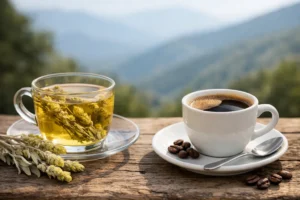
The first opening of the package is a small promise: a scent of leaves, flowers, peels, and Greek herbs that immediately travels to the space. How the tea is stored properly determines whether this promise will reach your cup intact or be lost silently among the humidity, light, and smells of the kitchen.
Tea and herbal infusions do not spoil suddenly like a fresh food. However, they lose something more subtle and essential: the liveliness of the raw material. A mountain tea with clear, melodic intensity or a blend with lemon balm, mint, and citrus can remain expressive for a long time, as long as it is protected in the right way.
How to store tea properly: the four enemies
Quality does not end with harvesting, selection of herbs, or careful packaging. It continues in the home cupboard, the hotel pantry, and the café counter. There, four factors can gradually alter the character of the tea: air, humidity, light, and strong odors.
Air accelerates the oxidation of aromatic components. The longer a package remains open, the more easily the aroma becomes flat and the taste less clear. Humidity is even more demanding: it can make leaves and herbs soften, stick together, and, in the wrong conditions, deteriorate significantly.
Light, especially direct sunlight, wears out natural colors and sensitive aromatic oils. Odors, finally, work almost insidiously. Tea is absorbent. If it is left next to coffee, spices, detergents, or scented candles, it can retain foreign notes that do not belong to its journey.
The right place is not always the kitchen counter
The most practical choice is a cool, dark, and dry cupboard, away from the oven, stoves, and dishwasher. Heat and sudden temperature changes do not help, even if the packaging appears well sealed.
Avoid the windowsill, open shelves that face the sun, and the cupboard right above the coffee maker. The steam from daily use rises discreetly, but it is enough to burden a paper package that opens and closes frequently.
The refrigerator is also not the obvious solution. Low temperature alone does not protect the tea when humidity and strong odors from food coexist. Additionally, frequent transfer from cold to room temperature can create condensation. For most teas and infusions, a stable, dry cupboard is a much better choice.
Airtight container, but with measure
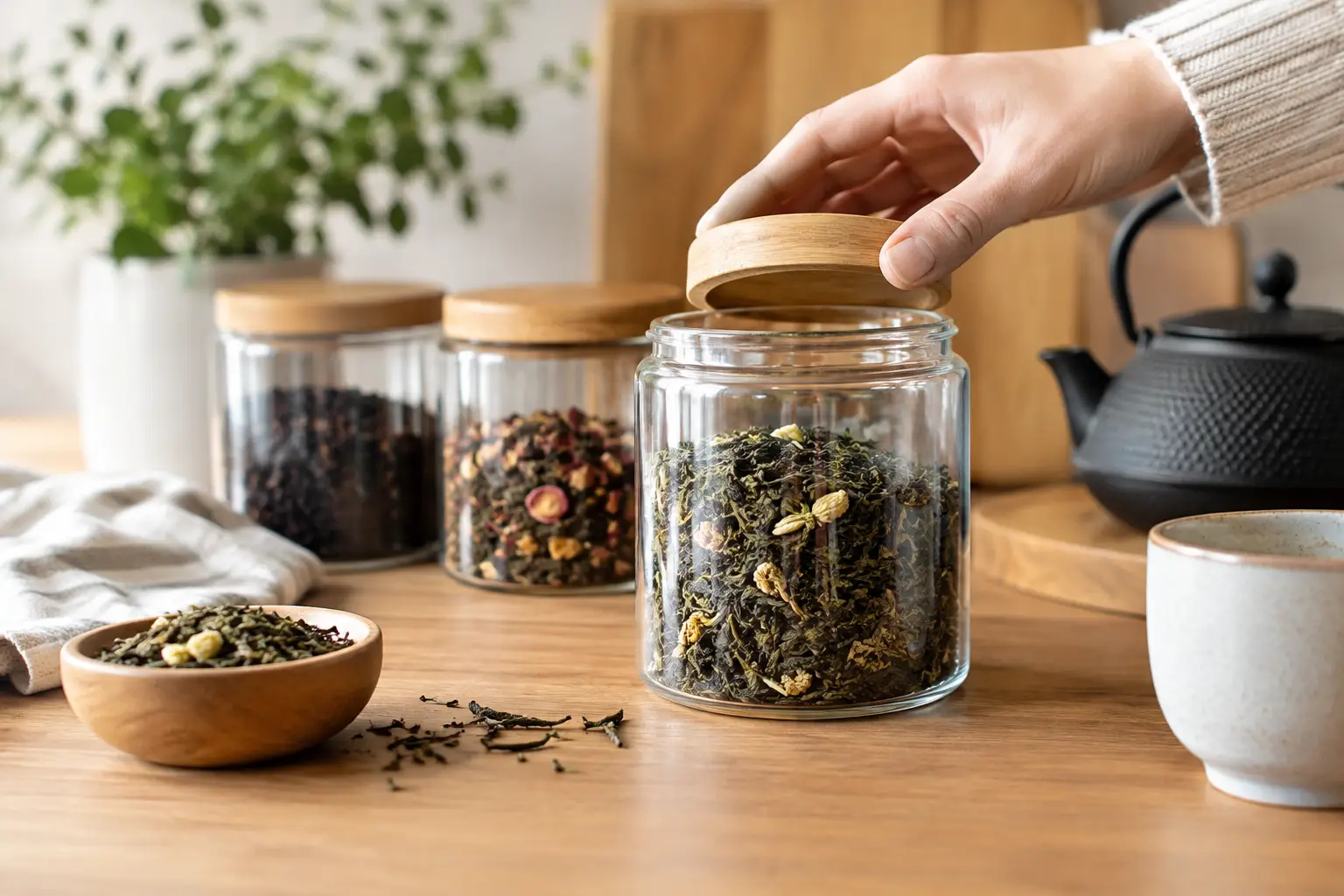
An opaque metal container with a lid that closes well is one of the most reliable solutions for bulk tea. It protects from light, limits contact with air, and keeps the contents organized. If you prefer a glass container, place it inside a closed cupboard. Transparent glass is beautiful, but it does not forgive exposure to light.
The container must be absolutely clean and, above all, completely dry. A drop of water or the humidity that remains after washing is enough to change the conditions inside. Before filling it, let it dry naturally for several hours.
However, you do not need to transfer every product to another container immediately. A quality, well-designed package can offer excellent protection, as long as it is closed carefully after each use. Transfer makes sense when the original packaging does not reseal or when the tea is consumed slowly over time.
Tea in leaves, pyramids, and herbs: what changes
Each form requires the same basic care, but there are small differences. Bulk tea has a larger contact surface with air, especially when it consists of finely cut leaves, flowers, or peels. Therefore, it is worth keeping it in a container that opens only when necessary.
Individual pyramids offer an additional level of convenience and protection, especially when stored in their original packaging. You do not need to expose them all in a large bowl for presentation purposes. A nice composition on the counter has value, but the taste experience has more. Keep a small amount available and the rest protected.
Greek herbs require special respect because their aroma is often more airy and delicate than that of a strongly roasted beverage. Greek herbal infusions, mountain tea, sage, lemon balm, and chamomile should not be stored with high-intensity spices. Cinnamon, cloves, and cardamom have their place in their own ritual, not in the same container with a pure herbal blend.
Do not mix different blends in the same container
One container for each type is the safest rule. Even two infusions that seem related can exchange aromas in a way that blurs their taste identity. The coolness of mint, for example, can dominate a more floral or citrusy blend.
This has particular importance in HORECA spaces, where consistency is part of hospitality. The visitor who orders an infusion expects the same clarity of aroma from the first to the last served cup. Separate storage and proper labeling of containers protect this consistency without unnecessary complexity.
How long does tea keep?
The minimum shelf life date on the packaging is the first point of reference. However, it is not the whole story. A product that has remained sealed, in proper conditions, usually retains its characteristics better than a product that has been opened many times and left near a heat source.
After opening, the best practice is to enjoy the tea within the next few months, rather than keeping it for a “special occasion”. The most sensitive floral and herbal blends are worth consuming earlier, when their nose remains bright and clear. The denser, spicier blends may seem more resistant, but they also gradually lose their detail.
The best control is sensory. Open the package and observe: the aroma should be recognizable, natural, and lively. If it seems dull, dusty, or foreign, the quality has already shifted. In infusion, pay attention to whether the taste is clear or has lost its duration and structure.
Small habits that protect the great experience
Do not leave the lid open while the water is boiling, and do not use a wet spoon to take bulk tea. Close the packaging immediately after use, keep the amount you have opened manageable, and buy at a pace that suits your consumption.
For a home that loves different flavors, it helps to discreetly note the opening date. In a professional space, this habit becomes a sign of care: proper stock rotation, clean containers, and small quantities in daily use. Tea Odyssey treats each infusion as a journey from the Greek land to the moment of enjoyment. Proper storage is the way not to cut this journey short before its destination.
So, let your tea stay away from the haste of the kitchen, protected from what does not belong to it. When the time of infusion comes, it will return to you the aroma, clarity, and memory of the place where it started.