A proper cold brew infusion is not just a hot drink hastily cooled with ice. It’s a slower, more precise process that lets the herbs speak at their own pace. If you’re wondering ‘how do I make cold brew infusion?’, the answer starts with three elements: clean water, quality raw material, and patience.
Cold brewing reveals a different side of Greek herbs. Mountain tea, sage, mint, lemon balm, or a carefully crafted herbal blend give a clearer, velvety, and often less bitter result than hot brewing. In the glass, the flavor doesn’t shout. It reveals itself.
What is cold brew infusion
Cold brew is the infusion of an infusion in cold water, in the refrigerator, for several hours. Unlike classic iced tea, where the herb is first infused in hot water and then cooled, no heat is used here.
The difference is not just technical. Hot water quickly releases aromas, body, and intensity, but can emphasize bitter or tannic notes, especially when the infusion is prolonged. Cold water moves slowly. It takes from the herb more discreet, refreshing, and aromatic sides, creating a drink with a clean aftertaste.
This doesn’t mean that cold brew is always better. If you’re looking for the deep, warm, rich feeling of a winter infusion, the classic method has its own value. But if you want a refined drink for the middle of a hot day, cold brew gives Greek herbs a new, almost gastronomic character.
How to make cold brew infusion step by step
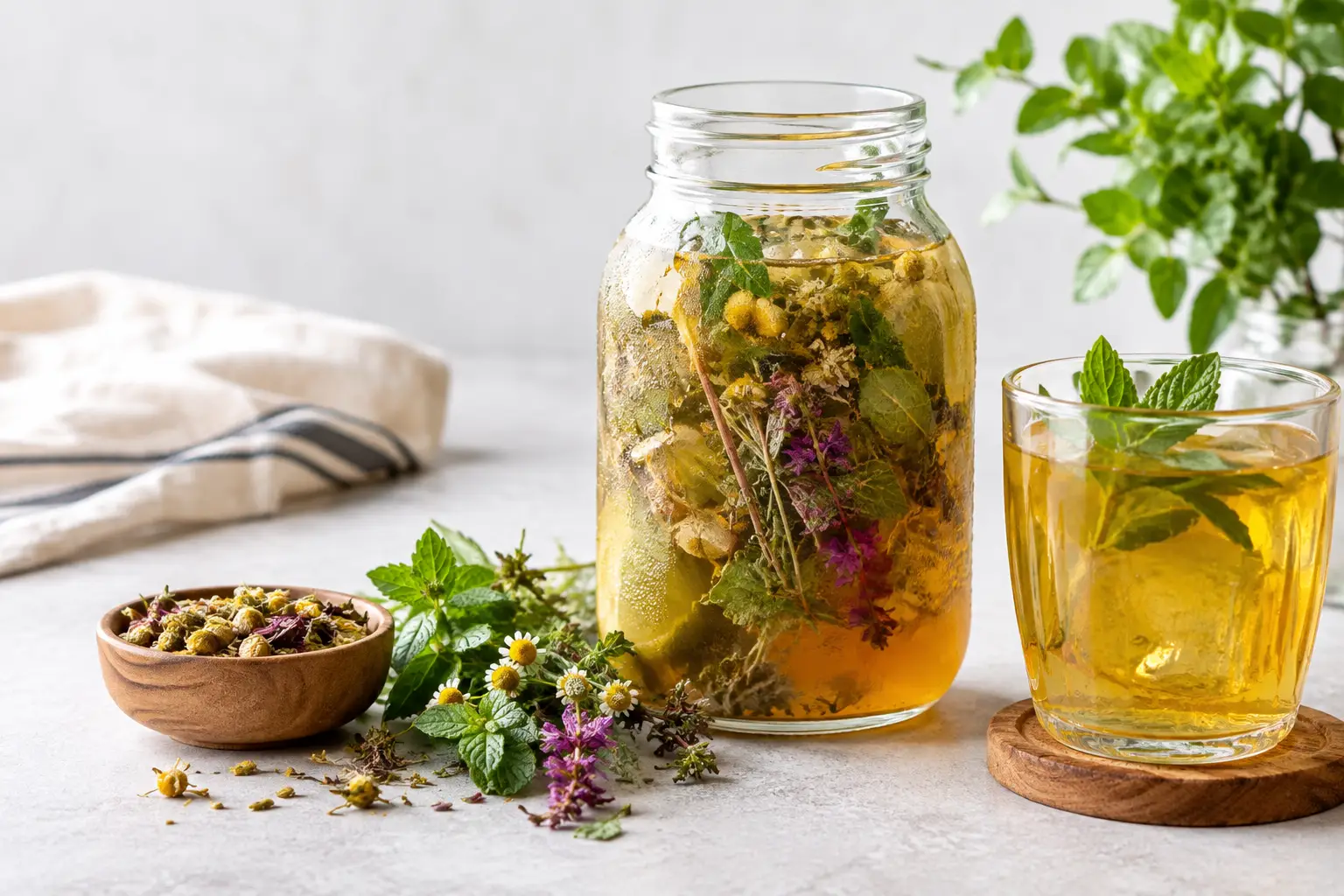
For a balanced result, no specialized equipment is needed. A glass container with a lid, a strainer, and good water are enough. Glass is preferable because it doesn’t affect the aromas and allows you to monitor the color of the drink as it evolves.
For about one liter of cold brew, you will need:
- 1 liter of cold, filtered water
- 3 to 5 biodegradable infusion pyramids or 8 to 12 grams of loose herbs
- a clean glass container with a lid
- optional, lemon peel, fresh mint, or a few slices of cucumber
Place the herbs in the water, close the container, and let it sit in the refrigerator for 6 to 10 hours. For more delicate compositions, such as lemon balm or chamomile, start with six hours. For mountain tea, sage, or blends with a more stable herbal body, eight hours usually give excellent balance.
When the infusion is complete, remove the pyramids or strain the herbs. Don’t leave them in the container indefinitely with the logic that the flavor will get better. After a point, the aroma can lose its brightness and the result can become flat or overly herbal.
Serve in a tall glass with ice. If you add lemon, prefer a thin strip of peel instead of a lot of juice. The peel gives aromatic brightness without covering the herb’s profile. For sweetness, a small amount of honey or agave syrup works better when dissolved first in a minimal amount of lukewarm water and then incorporated into the cold infusion.
The right ratio changes everything
The most common disappointment in cold brew is a tasteless drink, like flavored water. Usually, it’s not the method’s fault, but the small amount of herbs. Because cold brewing is gentler, it requires a slightly larger dose than what you would use for a hot cup.
The ratio of 8 to 12 grams per liter is a good starting point, but each infusion has its own character. A blend with mint or citrus notes shows its presence immediately. Mountain tea is more discreet and often benefits from a little more time or quantity.
Don’t try to fix a weak cold brew by leaving it for two days in the refrigerator. It’s better to increase the amount of infusion in the next preparation. Intensity comes from the ratio, while elegance comes from time.
Choose herbs with a clear origin
Cold brewing doesn’t hide imperfections. If the raw material is old, overly crushed, or of unknown origin, the glass will reveal it. That’s why choosing whole, carefully crafted herbs and quality blends is particularly important.
Greek herbs have a natural intensity and complexity that suits the technique perfectly. Mountain tea offers earthy, floral, and melodic shades. Lemon balm brings lemony clarity, while mint gives freshness without requiring additional aromas. A well-designed blend can turn a simple break into a small exploration of the Greek landscape.
Tea Odyssey approaches this experience with organic Greek herbs and biodegradable pyramids that leave space for the leaves and flowers to infuse properly. The pyramid shape is not a packaging detail. It allows the raw material to breathe and the water to circulate more freely around it.
When does cold brew need adjustment
Not all infusions react the same way to cold water. Mixtures containing dried fruits may give a fuller, almost juicy sensation, but often require eight to ten hours. Very delicate flowers can become overly aromatic if left for many hours, so it’s worth trying them earlier.
If you’re in a hurry, you can make a hybrid preparation: infuse the infusion in a small amount of hot water for two to three minutes and then top it off with cold water and ice. It’s a practical solution, but it doesn’t give exactly the same velvety feel as regular cold brew. The slow method remains the purest expression of the herb.
Also, watch the ice. Too much ice in an already light infusion will dilute it quickly. If you want to keep it intense, make it a bit more concentrated or use ice cubes made from the same infusion. It’s a small move that makes a noticeable difference in the last sip.
Storage and serving
Cold brew infusion keeps in the refrigerator, in a closed container, for up to 48 hours. On the first day, the aromas are at their clearest and most vibrant point. On the second day, it remains pleasant but may appear more subdued and rounded.
For a table, a brunch, or a thoughtful hospitality, serve it in a transparent jug with large ice cubes and a single aromatic element. A sprig of mint, a thin strip of lemon peel, or a small sprig of rosemary is enough. Excess in fruits, syrups, and garnishes often covers what deserves to stay in the spotlight: the authentic voice of the infusion.
Let the container wait in the refrigerator from the previous night. In the morning, you’ll have a ready glass of freshness that doesn’t try to mimic a soft drink but tells with calmness the origin, aroma, and time of the infusion.