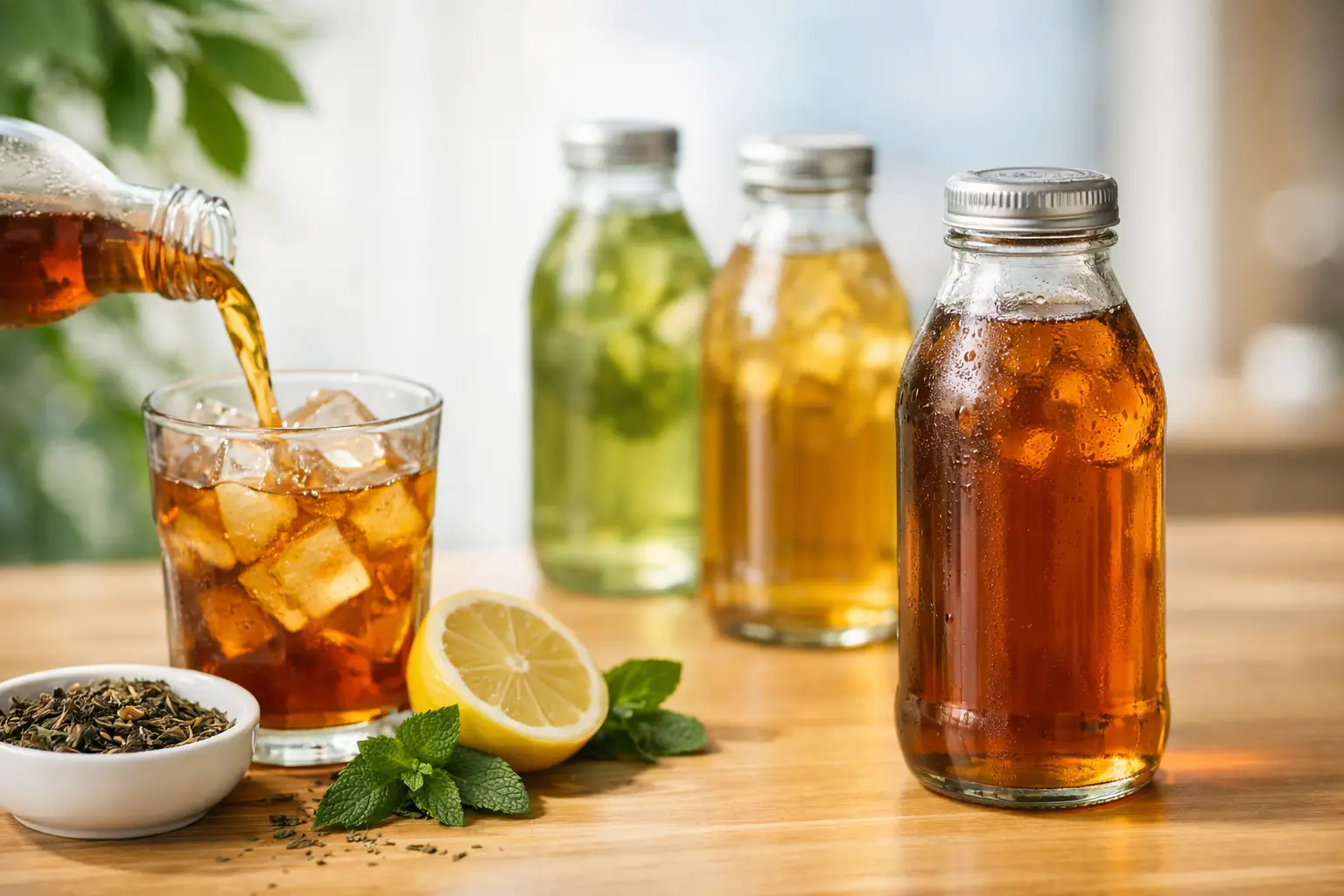
The refrigerator of a café, hotel, or modern home often says more than a label. If the answer to the question “how do I choose a bottled herbal tea?” is simply “I choose the flavor I like,” then the point is missed. Behind every bottle are raw ingredients, extraction methods, sweeteners, packaging choices and, above all, an intention: to offer a genuine beverage or simply a sweet, flavored version of one.
A good bottled herbal tea does not need to shout. The purity of its composition, its recognizable botanical identity, and its balance of flavors are enough to set it apart. It is a small everyday choice with greater depth: for those who want refreshment without compromising on quality.
How to Choose Bottled Herbal Tea from the Label
The label is the most honest map of the product. You do not need specialist knowledge to read it, only a little attention to what it states and what it avoids explaining.
Start with the base of the beverage. Does it contain real tea or herbal extract? Does it name specific plants, such as Greek mountain tea, mint, lemon verbena, or chamomile? Or does it settle for a general description and flavorings? The difference is not a minor detail. A herbal tea with a clear botanical origin has character, natural aromatic nuances, and a lasting flavor that is not easily replicated.
Next, look at the order of the ingredients. Those listed first are usually the ones present in the greatest quantities. When sugar takes center stage, the herbal tea risks becoming a soft drink with a herbal aftertaste. Sweetness can have its place, but it should not mask the raw ingredient. In a premium herbal ice tea, the herb should come through clearly before anything else.
Simplicity is often a good sign. Water, herbal extract or infusion, a carefully selected sweetening method where needed, and a few understandable ingredients make a more convincing proposition than a long list of additives. This does not mean that every lengthy label is automatically bad. It does mean that it is worth asking what purpose each ingredient serves.
The Raw Ingredient Is More Than Just a Story
Greek herbs carry the character of their landscape. The purity of the mountains, the intensity of the sun, the aromas of the earth, and the seasons are subtly reflected in the cup or glass. When a bottled herbal tea highlights its origin in a specific and substantiated way, it does more than add a nice story to the packaging. It gives consumers a reason to trust its flavor.
Greek mountain tea is a characteristic example. It is not a neutral base waiting to be covered by fruit or sweeteners. It has its own gentle, earthy, and floral character. In a carefully crafted chilled version, it can offer refreshment with depth, without the aggressive sweetness often found in conventional iced teas.
Organic cultivation is another factor worth considering, especially when you regularly consume herbal beverages. It is not, by itself, a guarantee of flavor, nor does it replace a good recipe. It does, however, indicate a different relationship with the raw ingredient and the soil from which it comes. For many conscious consumers, that relationship is an integral part of the enjoyment.
Flavor Should Have Balance, Not Intensity for Its Own Sake
A bottled herbal tea is usually served chilled, so its flavor needs precision. Cold temperatures reduce the perception of sweetness and aromas, which is why many products try to compensate with more sugar or intense flavorings. The result may be immediate, but it is rarely refined.
Look for a beverage that begins with a clean aroma, develops gently on the palate, and leaves a pleasant, non-sticky finish. Acidity, if present, should brighten the herbs rather than make them disappear. Sweetness should round out the composition, not turn every sip into a dessert.
Of course, personal preference also plays a role. Someone accustomed to soft drinks may initially prefer a sweeter version. Someone who drinks unsweetened herbal teas will look for greater botanical intensity. The right choice is not the strictest one, but the one that allows you to recognize and enjoy the raw ingredient without hiding it.
Pay Attention to What the Term “Ice Tea” Promises
The term ice tea can mean very different things. In some cases, it describes a refreshing drink with a tea flavor. In others, it refers to a genuine infusion or extract that is carefully bottled. The difference between the two versions is substantial, even when the packaging looks similar.
Do not settle for words such as “natural,” “botanical,” or “inspired by nature” when they are not accompanied by clear information. A product that respects the consumer explains what it contains. It does not rely solely on images of leaves, mountains, and fruit to imply quality.
Transparency is even more important for hospitality professionals. A café or hotel that chooses a bottled herbal tea for its guests is also choosing an experience and a story. The product should look at home on the table, in the minibar, or in a welcome basket, with visual consistency as well as content that staff can describe with confidence.
Packaging Is Part of the Choice
The bottle or box is the first point of contact, but not the last. Well-designed packaging protects the beverage, supports convenient consumption, and communicates its character without excess. For a premium herbal tea, aesthetics should be connected to real functionality: an easy-to-use format, clear information, and a responsible approach to materials.
Sustainability is not a decorative word. It is worth considering whether a brand shows consistency in its choices, from the raw ingredient to the packaging and the way it talks about the product. No packaging can solve the environmental issue on its own. Conscious consumption, proper recycling, and choosing companies with a clear direction, however, create a more meaningful chain of choices.
When Is It Worth Paying a Little More?
A higher price is not always synonymous with quality. When it is accompanied by superior raw ingredients, genuine Greek herbs, a carefully crafted recipe, a clear identity, and responsible presentation, however, it reflects a different kind of value. You are not simply buying refreshment for a few minutes. You are choosing a small pause with origin, flavor, and meaning.
This is also why a proposition such as “tea Odyssey” stands out in the category: Greek mountain tea and organic herbs are not merely a backdrop, but the protagonists of a contemporary herbal ice tea experience. Premium aesthetics have a reason to exist when they serve an authentic flavor identity.
The next time you stand in front of the refrigerator, let the packaging speak for a moment, read the ingredients, and imagine the flavor before opening the cap. Choose the bottled herbal tea that takes you to the place where its herbs come from, not the one that merely imitates their aroma.