
There are gifts that are opened, used and forgotten. And there are gifts that remain in the memory from the first moment their aroma rises from the cup. A gift of premium Greek tea clearly belongs to the second category, because it offers not just a beverage, but a way to transport oneself to mountains, aromatic gardens and small rituals of daily care.
For those who consciously choose what to give, tea is not a neutral solution. It is a sign of taste. It shows that you paid attention to quality, origin, detail. And when we talk about Greek herbs in a premium version, the gift acquires something else – cultural depth.
Why a premium Greek tea gift stands out
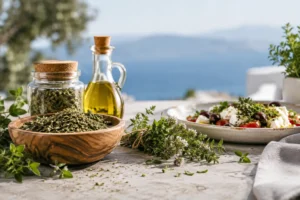
The difference is first seen in the raw material. The Greek landscape has a botanical richness with a distinct character – mountain tea, sage, verbena, dittany, mint. When these herbs are carefully harvested and standardized, the result is nothing like the flat, mass-produced blends on the market.
Then comes the feeling of the gift. A premium tea does not need exaggeration to impress. The purity of the aromas, the balance of the taste, the careful packaging and the feeling that what someone is holding in their hands has substance are enough. It is not a last-minute complementary item. It is a choice with character.
There is of course the practical advantage. Tea suits more people than we think. It can be offered to friends, colleagues, hosts, business contacts or people who already love refined everyday pleasures. It is a versatile gift, but not impersonal.
What makes a Greek tea truly premium?
The word premium is often used so easily that it sometimes loses its meaning. But in tea, quality is not hidden. It can be seen and tasted.
The origin of the raw material
The first question is simple: where does the herb come from? A clear Greek origin is important not only for reasons of identity but also for reasons of authenticity. A Greek herb that is cultivated or harvested with proper practices carries its land in the cup. It is not just another concoction with a Greek name on the packaging.
If there is an organic character, the proposal becomes even more complete. For today's public who is careful about what they consume, this is not a luxury detail. It is a basic criterion.
The purity of the composition
A premium gift has no room for vague compositions, heavy aromas that mask the raw material, or recipes that rely more on image than substance. Quality sounds paradoxical, but it is often seen in simplicity. When the herb is good, it doesn't need much to speak.
This is where producers stand out, treating tea as a culinary experience rather than a generic shelf product. The right proportions, pure flavor, and aromatic longevity make all the difference.
Packaging as part of the experience
Premium isn't just about the content. It's also about how it reaches the recipient. The biodegradable pyramids, for example, offer comfort without compromising the ritual of extraction. They are modern, practical and suit an audience that demands quality with an environmental conscience.
On the other hand, the aesthetics of the packaging strongly influences the first impression. A beautifully designed premium tea does not look like a random consumer product. It stands on the table, on the desk, in the guest room, almost like a design object.
How to choose the right gift Premium Greek tea
There is no one right choice for everyone. The ideal gift depends on the person, the occasion, and the message you want to convey.
If the gift is intended for someone who loves pure, authentic flavors, move towards mono-botanical or mild compositions with a clear character. mountain tea is often the most iconic choice. It has Greek identity, subtle power and a sense of intimacy that remains refined.
If you are addressing someone more familiar with the category, you can look for more complex blends with botanical contrasts and greater aromatic interest. In this case, the gift also functions as an invitation to try, as a small curated tasting experience.
For business occasions, balance is crucial. The gift should be distinctive without becoming ostentatious. A premium choice with a pure Greek identity, thoughtful design and high usability is usually smarter than something flashy but awkward. Especially in hospitality settings, corporate gifts or curated welcome moments, tea has the advantage of being easily associated with the concept of care.
Greekness is not decoration
In the premium products space, Greek identity is often used superficially. A little color, a little tradition, a little nostalgia. But when the product is truly based on Greek herbs, careful production, and modern aesthetics, Greekness ceases to be a communication trick. It becomes content.
This is especially important when tea is offered as a gift. The recipient doesn't just receive a nice box. They receive a version of modern Greece – authentic, cultivated, refined, with respect for nature and a pure aesthetic language.
That's exactly where a brand like "tea Odyssey" gains ground. Not only because it works with premium Greek herbs, but because it treats tea as an experience with a narrative, design consistency, and substantial differentiation from conventional products on the market.
For which circumstances is it most suitable?
A premium Greek tea works great as a hospitality gift, as a kind gesture at a business meeting, as a corporate gift with personality or as a selected proposal for holidays. It also fits well as wellness gifts, in small seasonal compositions or in cases where you want to offer something quality without falling into the logic of the predictable.
There are, however, trade-offs. If the recipient is not at all into tea or only prefers very strong, sweet flavors, a more herbal and subtle premium option may require more careful consideration. In this case, it helps to choose something with a more accessible aromatic profile or a more direct flavor character. The point is not to impress your audience with obscure complexity, but to find the right balance between quality and enjoyment.
What to consider before choosing it
First, check if the product description is specific. Vagueness usually does not favor quality. Then, pay attention to the type of packaging, ease of use and overall presentation. A premium tea should be beautiful when offered and equally good when opened.
Also consider the duration of the experience. A good gift doesn’t end with the first impression. It is repeated every time the recipient makes a cup. This is the discreet power of tea – it doesn’t impose itself, but quietly returns to everyday life and enhances it.
Ultimately, the right gift is not the one that screams the loudest. It is the one that seems to have been chosen with knowledge and sensitivity. And a Greek premium tea, when truly worthy of its origin, achieves something rare: to offer quality, cultural identity and true enjoyment in a single gesture.
If you want to give something that speaks of taste, place and care without unnecessary explanations, start with the aroma of Greek herbs. Often that is where the most discreet and most meaningful gift lies.