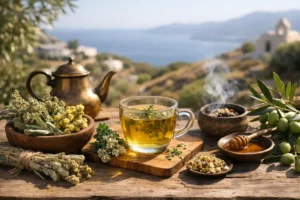
The herbal ice tea does not need exaggerations to stand out. It needs the right temperature, clean ice, and space in the glass to hear its real voice: the refreshing acidity of a fruit, the aromatic intensity of mint, the earthy purity from the mountain tea. How the herbal ice tea is served determines whether it will be offered as a simple cold drink or as a small, Greek taste stance.
For a premium herbal ice tea, presentation is not a decorative detail. It is part of the recipe. When the raw material is based on real herbal extracts, the wrong amount of ice or a glass that holds odors can hide the notes that make the difference.
How to serve herbal ice tea for a balanced taste
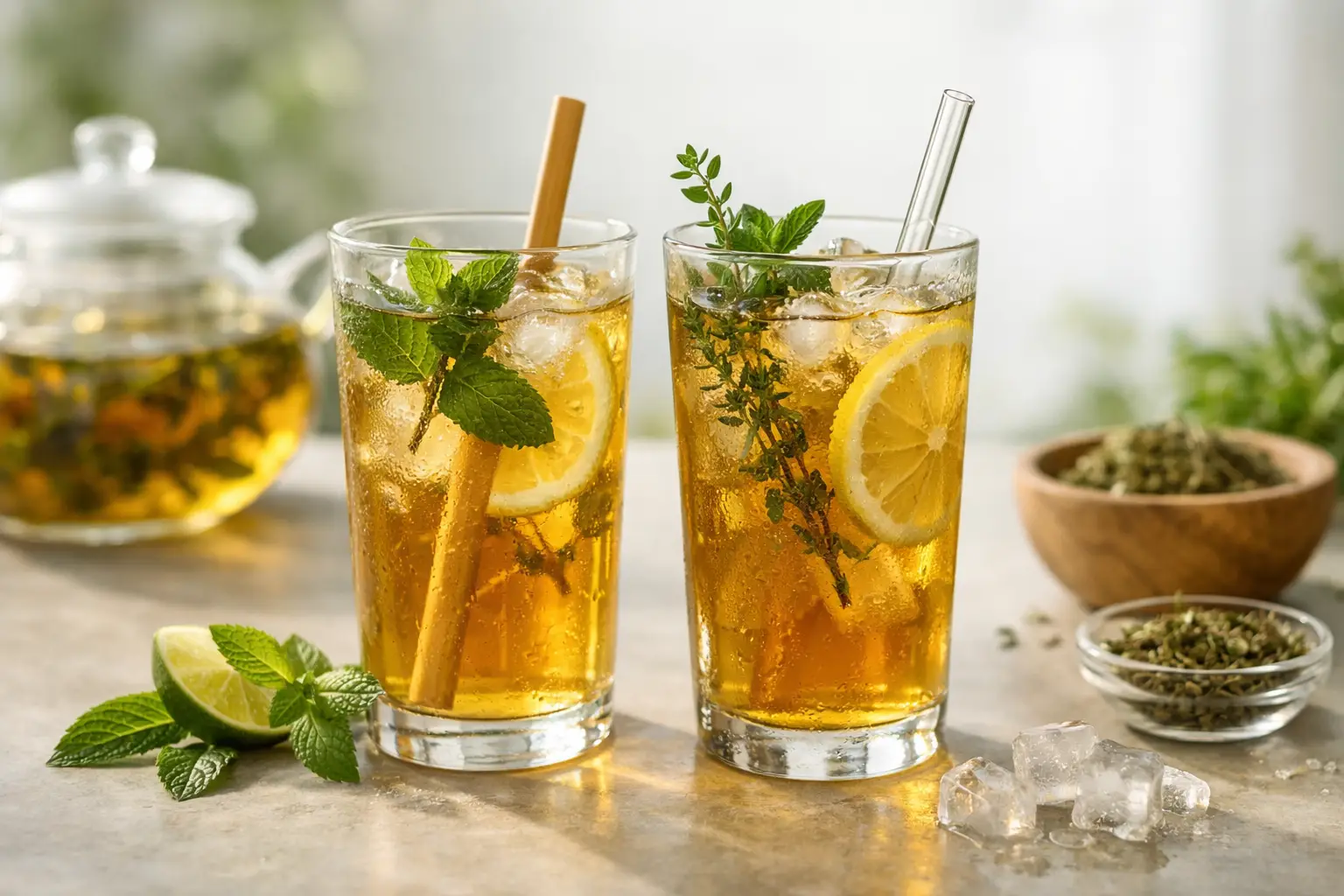
The safest starting point is a tall, clear glass with a capacity of 300 to 400 ml. The clear glass is not chosen only for the image of the drink. It allows the color, clarity, and subtle movements of the botanical elements to become part of the experience. For a more formal serving, a thin highball glass gives a clear, modern line. For more relaxed moments, a lower tumbler works just as well, as long as it is not too wide.
The glass must be cold, but not frozen from the freezer. A glass that has been in the refrigerator for a few minutes helps the drink maintain its temperature without creating excessive condensation on the outside. Above all, it must be perfectly clean and free of any detergent, coffee, or wine residue. Herbs have a delicate aroma and do not forgive foreign odors.
The ideal serving temperature is usually between 4°C and 7°C. Warmer, the herbal ice tea loses its liveliness. Much colder, the aromatic peaks close and the taste seems flat. The balance is what allows the drink to refresh without silencing.
The ice should cool, not dilute
Fill the glass two-thirds with large, compact ice cubes and add the herbal ice tea slowly. The large cubes melt more slowly than crushed or very small ice, so they keep the taste stable until the last sip. The ice must be fresh and neutral, made from clean water. Ice that has absorbed freezer odors can alter even the most careful drink.
There is, of course, an exception. On a very hot day or outdoors, where the temperature rises quickly, a bit more ice is preferable to a lukewarm glass. In this case, choosing a herbal ice tea with a full botanical body is even more substantial, because it maintains its character better as the ice melts.
The right garnish follows the herb
The garnish should not disguise the herbal ice tea. Its role is to subtly hint at what is to come in the taste. A thin slice of lemon gives light to compositions with mountain tea, lemon balm, or mint. A strip of orange peel suits warmer, fruitier notes. A small sprig of mint can work wonderfully, as long as it is not mixed aggressively into the drink and dominates the aroma.
Simplicity is often the most refined choice. A glass filled with slices of fruit, herbs, syrups, and colorful straws may look impressive, but it distracts from the quality of the drink. When an herbal ice tea has a clear composition and origin, it does not need scenery. It needs accuracy.
For professional serving, consistency has special value. Use the same citrus cut, the same amount of ice, and the same glass for each order. This way, the experience remains recognizable from the first table to the last. In hotels and hospitality spaces, this small discipline turns a welcome drink or a brunch accompaniment into an identity element.
Does it need a straw?
A straw is useful when the glass has a lot of ice or when the drink is served outdoors. However, it is not necessary. On a refined table, a clean glass or metal straw can match the premium aesthetic, while in other cases, the glass alone allows for better contact with the aroma. If used, the straw should not compete with the composition with intense colors or plastic presence.
Ready herbal ice tea or cold infusion?
The answer depends on the moment. A ready premium herbal ice tea is served directly from the refrigerator, with ice and a simple garnish. It is the practical choice for the office, travel, beach bar, or a table where quality must remain stable without preparation. Tea Odyssey treats this moment not as a compromise, but as an opportunity for Greek herbs to reach the glass in a clear, modern form.
If you are preparing herbal ice tea from tea pyramids, the process requires a bit more attention. Do not pour a strong hot infusion directly onto a lot of ice. The sudden dilution can make the taste weak. Prefer to make the infusion slightly more concentrated, let it come to room temperature, and then chill it in the refrigerator. When it is already cold, serve it over ice.
The cold infusion is another, more gentle path. Place the pyramids in cold water and let them sit in the refrigerator for several hours, according to the intensity you desire. The result tends to be more delicate, with less bitterness and a more rounded sensation. It does not suit every blend in the same way, so testing is part of the enjoyment.
What to avoid when serving
The most common mistakes do not involve complicated techniques. They mainly concern excess. Do not add sugar out of habit before trying the drink. A quality herbal ice tea has its own balance, and the added sweetness often covers its herbal purity. If adjustment is needed, start with a minimal amount and choose something discreet, such as a little honey in a homemade preparation.
Also, avoid large amounts of juice. A few drops of lemon can illuminate an infusion, but too much juice turns it into another drink. The same applies to sparkling water: it can give a refreshing, aperitif dimension, but it dilutes the structure and changes the character. Use it only when you consciously want a more refreshing, gastronomic serve.
Finally, do not let the glass wait. The herbal ice tea is served at the moment it is ready, when the ice is clean, the glass is cold, and the aromas are present. Freshness is not just temperature. It is timing.
Small occasions, different serving
At a hotel breakfast, choose a tall glass, plenty of ice, and a thin slice of lemon. Next to a light meal, an herbal ice tea without garnish or with just one citrus peel works as a clean companion, without claiming the role of the dish. At an afternoon meeting at home, a larger glass with a sprig of fresh herbs adds effortless care.
The best version is not always the most impressive. It is the one in which the refreshment leaves room for the origin: the Greek herb, its subtle aromatic path, and the feeling that, for a few sips, the glass can become a journey with a clear destination.