A handful of mountain tea can bring the aroma of a mountainside to your cup. A thin dose of verbena is reminiscent of a summer garden after watering. This guide to Greek herbal teas is not just about what to pick off the shelf. It's about how to recognize the origin, respect the herb, and turn a pause in the day into a small ritual of taste.
Greek herbs don't need intensity to stand out. They need pure raw materials, proper extraction, and space to express their character. That's the difference between an indifferent hot drink and a concoction with a memory of place.
Guide to Greek herbs for herbal teas with character
Greece has a rare botanical geography: sun, altitude, rocky terrain, sea winds and microclimates that change from island to island and mountain to mountain. These conditions are not just a nice story. They influence the aroma, intensity and duration that each herb leaves on the palate.
For a brew with a distinct identity, look for whole or carefully cut plant parts, not a powder that lacks flavor and color. The leaves, flowers, and tender shoots should have a natural appearance and distinct aroma before they even meet the water. Organic farming adds another essential criterion: care for the land that provides the raw material.
Mountain tea: the calm power of the Greek peak
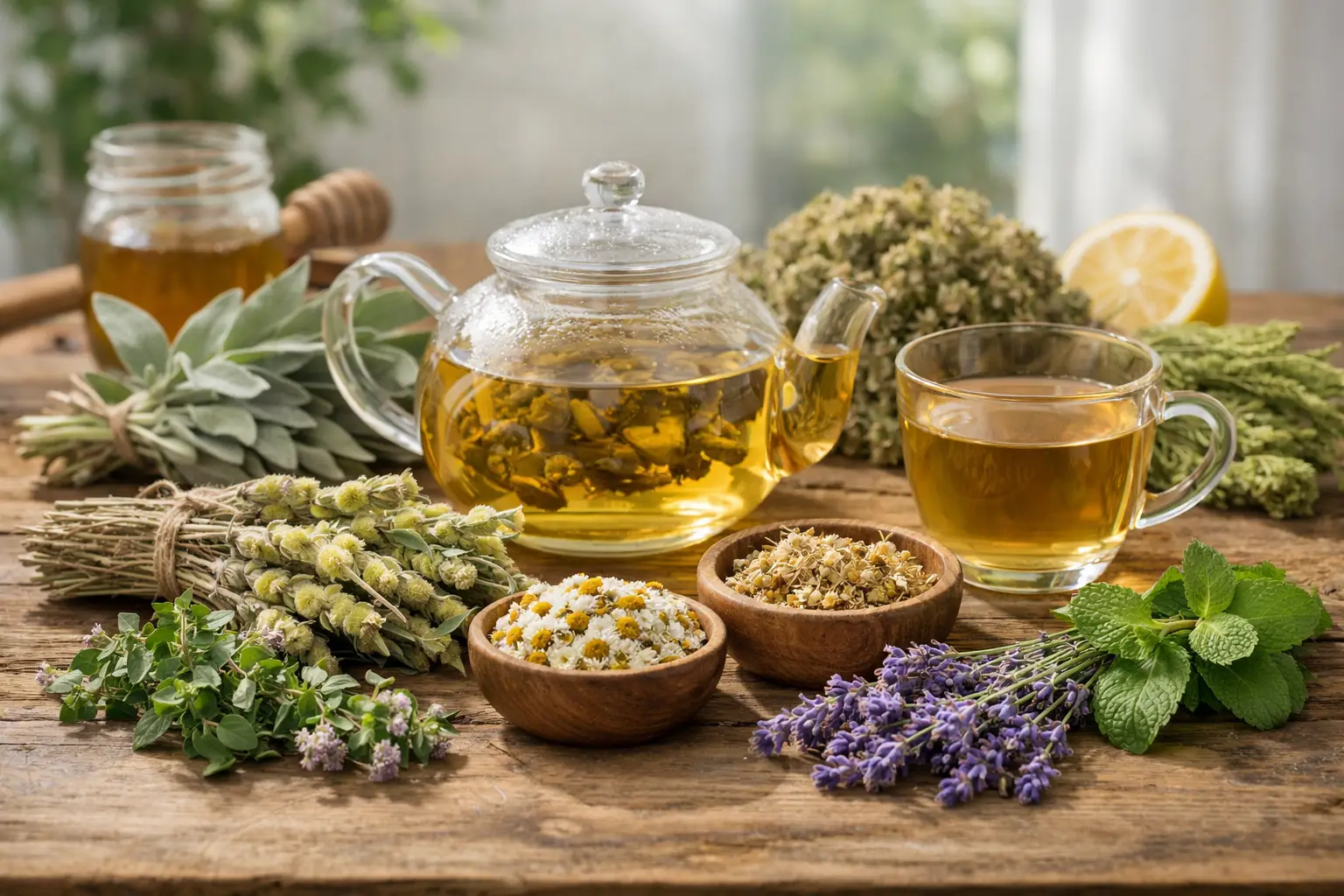
Mountain tea, with its clean, softly floral and earthy personality, is the natural starting point for any Greek herbal tea collection. It is unlike conventional tea. It comes from the Sideritis genus and offers a bright, golden cup with notes reminiscent of wildflowers, honey and dry grass after the sun.
Enjoy it neat when you want to “listen” to the raw material without interference. If you prefer a more rounded flavor, a little lemon peel or a drop of honey can accompany it without covering it. In a cold version, it retains its charm and becomes a sophisticated alternative to ordinary iced teas, which rely more on added flavors and sweetness, rather than on the actual extract.
Mint: refreshing purity without acidity
Mint is the herb for those seeking freshness, without the acidity of a citrus fruit. Its aroma is lively, green and lemony, while in the mouth it leaves a clean, almost refreshing aftertaste. It goes perfectly with the afternoon light, with a light meal or as a cold drink in a tall glass with ice.
Mint pairs beautifully with mountain tea, but it needs balance. If it dominates, it can drown out the more subdued floral notes of Sideritis. In a blend, mint works best as a bright accent rather than a monologue.
Sage: deep, resinous, with presence
Sage is more demanding and therefore exciting. It has an intense, herbal aroma with resinous and slightly peppery nuances. It does not require a large amount or a prolonged extraction time. When left in water for too long, its taste can become heavy or bitter.
Use it when you want a more serious, gastronomic cup. It is combined with orange peel or a small amount of thyme honey, while it also gives an interesting dimension to cold servings. As with any herb, consumption requires moderation and people with special health needs, pregnancy or medication should seek personalized advice from a health professional.
Chamomile: the delicacy we often underestimate
Good chamomile is not flat. It is sweet, floral, with distinct notes of apple and ripe grass. Its quality is evident in the flowers: the more recognizable, pure and aromatic they are, the more likely the cup is to retain its natural elegance.
Chamomile loves simplicity. On its own, it is a peaceful experience. With verbena it takes on a brighter direction, while with a little mountain tea it becomes more structured. Avoid overly sweet additives, because its natural softness does not need to be hidden.
Extraction is part of the flavor
The best herb can lose its voice if prepared in a hurry. For most Greek teas, use fresh, freshly boiled water and let the herb steep, covered, for about 5 to 8 minutes. The covering is not a detail: it protects the volatile aromas that would otherwise be lost with the steam.
Mountain tea usually takes a little longer and often gains more depth at 8 to 10 minutes. Mint and chamomile need a gentler approach, while sage benefits from brevity. There is no absolute recipe, because the intensity varies depending on the variety, the season of harvest, and how whole the herb is.
If you use tea pyramids, leave plenty of room for the water. The pyramid is not just an aesthetic choice. It allows the leaves and flowers to open up, releasing their aroma and flavor more fully. Biodegradable pyramids add to this experience with a more conscious packaging choice, without taking anything away from the enjoyment.
Hot or cold? The herb changes, it doesn't disappear
A cold brew is not just a hot drink with ice cubes. Ice reduces the sweetness and aromatic intensity, so the initial infusion needs to be a little more concentrated. Prepare the brew with less water, let it come to room temperature, and then add ice.
For a smoother result, try cold-pressing in the refrigerator for several hours. This method often yields a milder body and less bitterness, especially in herbs with a strong character. It requires patience, but it rewards those seeking cleaner lines in the flavor.
This is where the value of a premium herbal ice tea stands out. When a ready-made option It is based on real extracts of Greek herbs and not on vague aromas, it maintains its botanical core even when served chilled. The Tea Odyssey approaches this logic with an emphasis on Greek herbs and especially mountain tea: a proposal that treats the frozen beverage as a tasting experience, not as a conventional tea-flavored soft drink.
How to choose a brew that's worth your time
Read the ingredients before you get carried away by the packaging image. A clean blend lists specific herbs and doesn’t need to rely on vague descriptions. The origin, cultivation method, and form of the herb are more meaningful criteria than promises that sound impressive but say nothing about the cup.
Also consider when and how you want to enjoy it. For morning clarity, choose mountain tea with mint. For a quiet evening, chamomile with subtle floral notes. For a table or hospitality, a more complex blend with sage can stand with the same respect you would give a fine wine or a sophisticated dessert.
The right brew doesn't require you to change the pace of your life. It only requires a few minutes of attention: clean water, a good cup, and the willingness to let the Greek land speak in its own, aromatic way.