
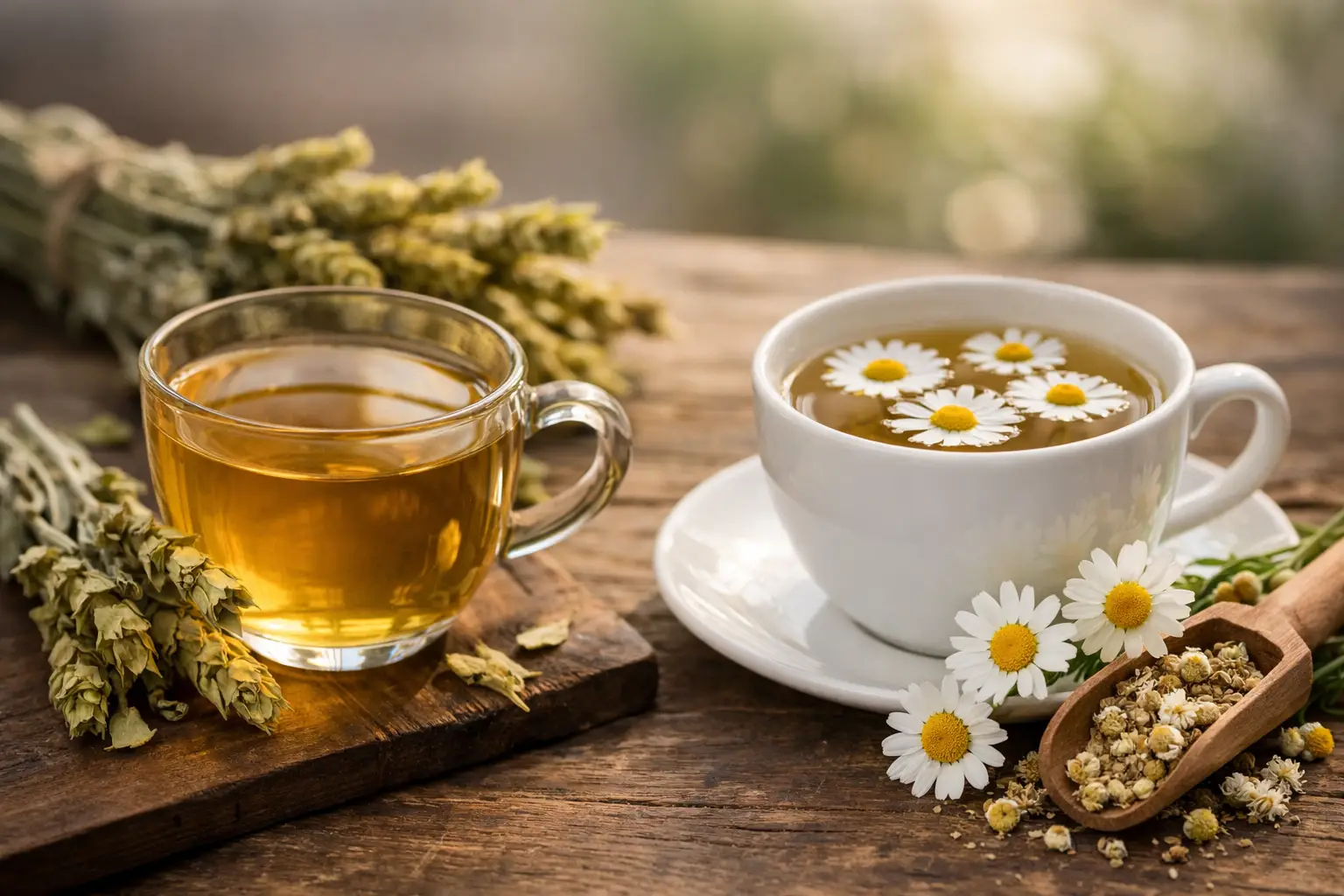
The choice is not always made in front of the kitchen cupboard. Sometimes it begins on a mountain path, among stones that hold the heat of the sun, or in a garden where flowers subtly open their fragrance. Mountain tea or chamomile; ? Two herbs deeply connected to Greek everyday life, two different ways to give yourself time.
The question has no absolute winner. Mountain tea and chamomile have distinct origins, flavor profiles, and places in the day. The best choice depends on what you are looking for at that moment: a clean, botanical character and a sense of Greek nature or a gentle, floral ritual of calm.
Mountain tea or chamomile: two Greek routes
Mountain tea, also known as sideritis, is born in the mountainous regions of Greece. Its identity is open, bright and earthy. In its cup one encounters notes of grass, flowers and a slight sweetness, with that characteristic purity that does not need much to express itself. It is an herb that carries its landscape: altitude, clean air, rocky soil, austerity.
Chamomile follows a different path. Its aroma is more floral and tender, its taste often more rounded, with subtle notes of honey and dried flower. It is familiar without being simple. A good chamomile is not only reminiscent of the familiar cup before bed, but a careful decoction with aromatic depth and natural sweetness.
The comparison, therefore, is not between «strong» and «mild.» It is between two different sensory expressions. Mountain tea is more herbal and mountainous. Chamomile is more floral and gentle. Both deserve a place in your everyday collection.
The taste starts from the raw material
In herbs, quality is not a detail. It is the essence. The cultivation area, the harvest season, the drying method, and the care taken in selecting the parts of the plant determine whether the cup will have real presence or just color.
For mountain tea, look for whole or carefully cut parts of the plant, with a natural appearance and a vibrant, clean aroma. Too much powder in the packaging usually robs the infusion of the delicacy and duration that a quality herb can provide. The same goes for chamomile: the flowers and their freshness matter. The purer the raw material, the more recognizable the aroma in the cup.
This is the difference between a quick hot drink and a small taste experience. In the biodegradable pyramids of “tea Odyssey”, the selection of Greek organic herbs leaves room for the plant to breathe and for the water to take on its character. It is not just about convenience. It is about respect for the raw material and the moment of enjoyment.
When is each most suitable?;
Mountain tea is an excellent companion for those times when you want a drink with a clean, vibrant botanical signature without caffeine. It fits the breakfast table, during a work break or after a meal, when you are looking for a lighter sensation. Its discreet flavor accepts a slice of lemon or a little honey, without losing its identity.
Chamomile is often chosen later in the day, when the pace slows down. Its gentle floral side makes it ideal for a quiet evening habit, for reading, or for the last moments before the day ends. This doesn't mean it belongs exclusively to the evening. A quality chamomile can stand just as beautifully on a slow weekend morning.
Here, «it depends» is the most honest answer. If you want a flavor with a greener, mountain-like flavor, choose mountain tea. If you want a softer, floral profile, turn to chamomile. If you want to make a decision based on the moment, keep both close by.
From the hot cup to the iced glass
Mountain tea has a special advantage: it is excellently transported even in its cold version. Its botanical purity remains recognizable with ice, while its natural freshness makes it an ideal base for a premium herbal iced tea. With a little lemon, thin slices of peach or a sprig of fresh mint, it acquires a summery character without the need for excessive sweetness.
Chamomile can also be made into a cold brew, but it requires more care. Its floral notes are subtle and can easily be lost if too many ingredients or strong sweeteners are added. It works best with simplicity: careful extraction, ice, and perhaps a very small dose of honey.
For dining areas and hospitality, this difference has practical significance. Mountain tea can function as the Greek, gastronomic answer to the usual iced teas that rely more on sugar than real extract. Chamomile, on the other hand, adds a calmer, more refined option to the hot beverage menu.
Proper preparation makes the difference
The water doesn't need to be boiling vigorously over the herbs. For mountain tea and chamomile, use fresh water that has just come to a boil and let the infusion steep for about five to seven minutes. This allows the aromatic notes to develop without becoming overpowering.
If you like a fuller flavor in your mountain tea, you can leave it a little longer. For chamomile, the balance is often more delicate: over-extraction can reduce its silky feel. Try it neat first. Only then will you understand what, if anything, it really needs.
Honey is a natural choice for both, but it’s worth adding sparingly. The goal is not to cover the herb, but to converse with it. In mountain tea, lemon adds brightness. In chamomile, a few drops can bring out its floral side, as long as it doesn’t become dominant.
A choice with character, not a rule
Daily care is often hidden in small decisions. In a cup chosen not out of habit, but out of mood. Mountain tea speaks of the purity of the Greek landscape and the power of simplicity. Chamomile brings the intimacy of the flower and a quieter pause.
Save the mountain tea for the moments when you want to feel the freshness of the mountain on your table. Leave the chamomile for when the day calls for softer light. And on the days when you don't want to choose, prepare both – because good taste doesn't need a dilemma, it needs attention.


