There is a moment when tea ceases to be just a hot drink. It is the moment when you open the package and the aroma of the herbs arrives clean, recognizable, without noise. That is where organic tea is tested in pyramids – not only in taste, but in the truth of the raw material, in the way it is extracted, in the consistency of the experience from the first cup to the last.
For those tired of the flat teabags on the mass shelf, pyramids are not just a more elegant form of teabag. They are a different brewing philosophy. When combined with organic herbs and carefully selected leaves, they can showcase the tea as it deserves – with room to open, to breathe, to give its full aromatic and flavorful imprint.
What does organic tea really mean in pyramids?
The term sounds familiar, but it doesn't always mean the same thing for every product. Organic tea means that the raw materials have been grown and certified according to specific organic farming standards. This refers to the absence of synthetic pesticides and chemical fertilizers, but also to a more holistic cultivation logic that respects the plant, the soil and the cycle of nature.
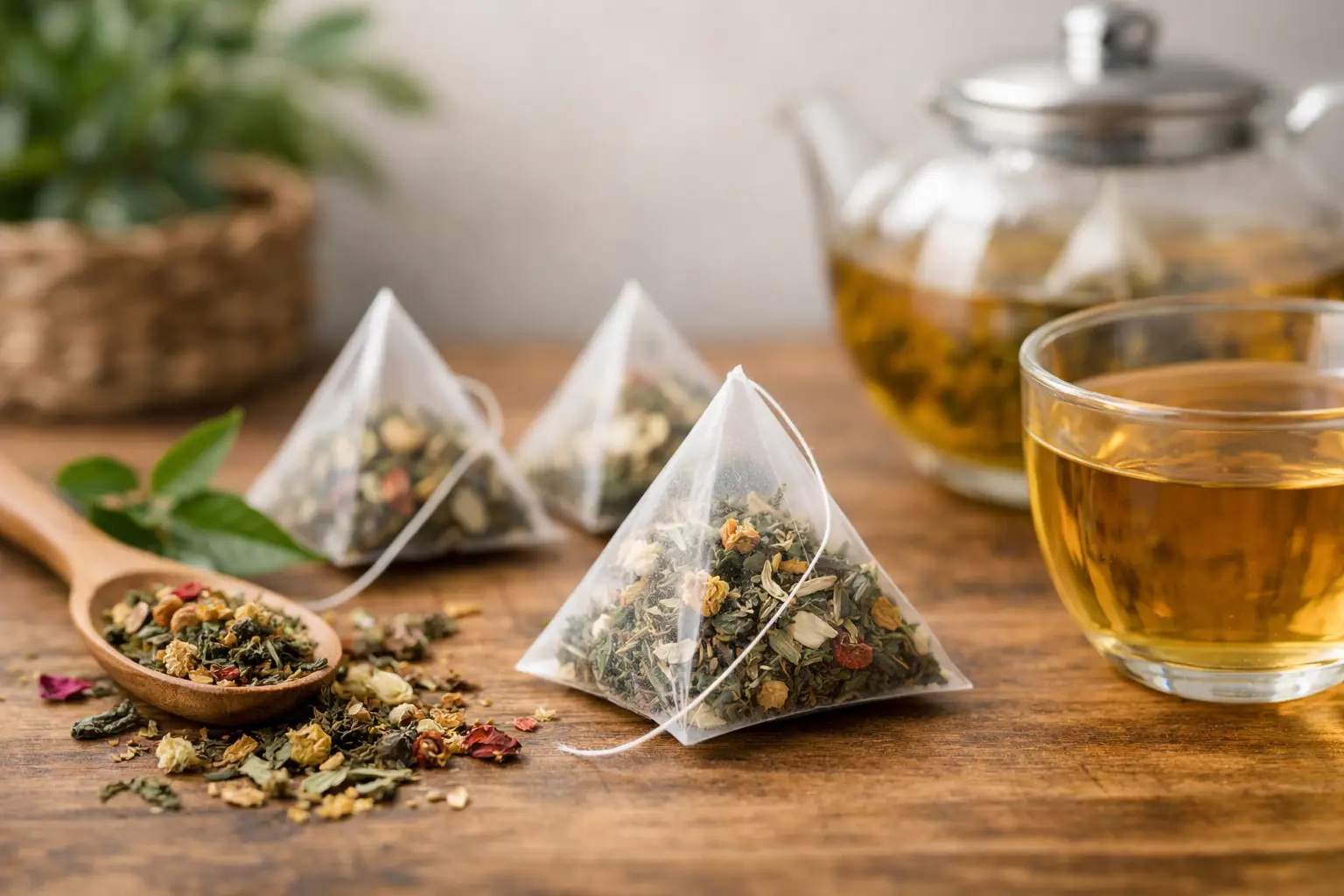
Pyramids, on the other hand, are not an aesthetic luxury. Their shape allows the leaves, flowers and cut herbs to move better in the water. This way, the extraction is more uniform and more generous compared to a classic, flat sachet that often compresses the contents and limits their growth.
This does not mean, of course, that every pyramid is superior in itself. If there is low-quality raw material, dust, or excessively crushed material hidden inside, the result is not saved by the shape. The pyramid is a tool. The essence remains what is placed inside it.
Because the quality of the raw material changes everything
In tea, the raw material is unforgiving. There is no room for tricks when the product is based on water and extraction. If the herb is properly harvested, has a clean aroma and is carefully dried, you will know it immediately. If it has lost its aromatic oils, if it is tired or if it is covered behind strong aromatic additives, you will still know it.
That's why premium organic tea is not based only on certification. It is based on the origin, the freshness, the consistency of each batch. Especially when we are talking about Greek herbs, such as mountain tea, verbena, chamomile or sage, the difference between just right and truly excellent is great. The altitude, the season of collection, the drying method and the standardization directly affect the cup.
A consumer who chooses consciously doesn't just buy organic. They look for character. They want to be able to recognize the herb, to feel its natural intensity, to enjoy a flavor that doesn't resemble an industrial construction, but a place.
The pyramids as an experience, not just as packaging
Tea packaging is often underestimated, when in fact it affects both extraction and perception of quality. Pyramids brought a significant upgrade to the category, precisely because they allowed whole or more generously cut ingredients to function as they should.
In a good organic tea pyramid, you often see the contents themselves. That in itself builds trust. You recognize leaves, flowers, herbs, colors and textures. The product is not hidden. It is displayed honestly.
There is also the practical benefit. Pyramids offer the convenience of easy serving without requiring special equipment. For the modern consumer, but also for a hospitality space that needs speed without compromising on quality, this balance is valuable.
Biodegradable pyramid or just a pretty picture?;
Here lies a crucial detail. The premium experience today is not only refined. It must also be responsible. When the product speaks of nature, purity and herbs, its packaging cannot move in the opposite direction.
That's why the biodegradable pyramids are of particular importance. They are not just an additional marketing advantage. They express a more consistent attitude towards the product and the way it reaches the consumer. Of course, caution is needed here too. A vague claim about ecology is not enough. Clarity about the materials and honesty in the overall approach to packaging are needed.
For an audience that chooses based on quality and conscience, this information carries real weight. The same applies to HORECA, where the image of the product is increasingly linked to the philosophy of the space.
How a good organic tea stands out in pyramids
The difference is visible before the water even boils. It starts with the composition. The purer and more recognizable it is, the better. When the product is based on authentic herbs and not on aromatic excesses, the result has depth and distinction.
It continues with the aroma. A proper organic brew doesn't shout. It doesn't hit you with aggressive intensity. It calls you more calmly, but more convincingly. The aroma is vibrant, natural and clean.
Then comes the extraction. If the color develops evenly and the flavor gains body without becoming heavy or indifferent, then something has been done right. In Greek herbs, this is especially evident. A good quality mountain tea, for example, is not just pleasant. It has elegance, freshness and a clean aftertaste.
Finally, consistency is important. A premium product doesn't just win you over once. It should satisfy you over and over again, whether you enjoy it at home or serve it in a demanding professional setting.
Greek botanical identity is not a trend
Greek herbs do not need sophistication to stand out. They already have memory, geography and cultural depth. From the slopes where mountain tea grows to the aromatic plants that characterize the Mediterranean land, Greece possesses a rare raw material that deserves to be presented with care and a modern perspective.
That's exactly where organic tea in pyramids finds its most interesting version. Not as an imported aesthetic habit, but as a modern means of highlighting an authentic Greek content. Tradition does not lose its value when it meets design and innovation. On the contrary, it acquires a new language and a new presence.
A brand like Tea Odyssey clearly positions this relationship, bringing Greek organic herbs into a form that serves both everyday enjoyment and premium hospitality. This matters, because it shows that quality is not an abstract promise. It is a choice at all levels – from the plant and the pyramid to the aesthetics of the final serving.
For home, office or hospitality?;
The short answer is that it depends on what you want from your tea. At home, pyramids offer comfort without taking away the sense of ritual. At the office, they provide a more refined and practical solution than regular tea bags. In hospitality, they act as a branding element.
For a hotel, a café or a restaurant, tea is not just an accompaniment. It is a message. It shows whether the place pays attention to details, whether it invests in raw materials, whether it has personality. A thoughtful organic brew in a pyramid upgrades the visitor's experience in a direct but not ostentatious way.
On the other hand, not all consumption is the same. Someone who drinks large quantities of tea may want bulk solutions for greater flexibility. Someone else will prioritize ease and consistency of result. The right thing is not absolute. It is what suits the rhythm, the demands and the aesthetics of each moment.
Good tea does not need exaggeration to convince. It needs pure origin, proper form and respect for what it contains. If a pyramid manages to convey to the cup the aroma, memory and purity of a true Greek botanical landscape, then you are not just buying a beverage. You are choosing a more substantial way to enjoy everyday life.



Pingback: Herbal iced tea that stands out – tea odyssey… more than a tea a voyage