
Sustainable Beverages with Substance in Every Sip
The water boils, the pores of the herbs open, extracting their aromas, and the first sip brings the place closer. That's where the true value of herbs begins. Sustainable beverages: not in a general promise, but in the small decisions that lie behind each cup or each frozen bottle. The origin of the raw material, the way it is grown, the purity of the recipe, the packaging, and the journey to our table create an experience that lasts longer than its taste.
For the conscious consumer, sustainability is not a trend or a decorative element on the label. It is the question that precedes the choice: what is in what I drink, where does it come from, and what does it leave behind? In beverages, the answers can be as clear as a good brew.
What Makes a Beverage Truly Sustainable?
A sustainable beverage is not judged by a single factor. Recyclable or biodegradable packaging is important, but it is not enough when the raw material travels thousands of kilometers unnecessarily or when the recipe relies on vague flavors, excessive sugar, and minimal actual plant extract.
The essence lies in the total journey. A beverage with herbs grown with respect for the land, processed with care, and delivered to the consumer with fewer unnecessary materials has a different footprint and a different value. It's not about perfection — no production chain is without burden. It's about a documented effort to reduce compromises where they really matter.
Place of origin, for example, is not just a romantic idea. When Greek herbs are chosen, the distance between the place of cultivation and production can be shortened. At the same time, knowledge about plants belonging to the Mediterranean landscape is strengthened: mountain tea, sage, verbena, mint, chamomile. Each one carries its own aromatic character, which does not need to be covered up by strong sweeteners or artificial impressions.
The Raw Material Is the Beginning of History
In premium herbal teas, quality is not manufactured at the end of the process. It starts with the plant. The season of collection, drying, storage, and balance of the recipe determine whether the cup will have depth, purity, and longevity — or just a strong aroma that quickly fades.
Choosing organic Greek herbs, where available and certified, provides a meaningful orientation. It connects enjoyment with practices that limit the use of synthetic inputs and recognize that soil is not an inexhaustible resource. It does not mean that every organic product is automatically the best possible choice. But it does mean that cultivation is viewed as part of a larger responsibility.
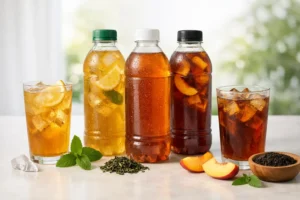
There is also the value of transparency. A beverage deserves to be clear about its ingredients. The consumer should be able to tell the difference between real extract and a vague taste promise, and between the herb and a recipe that relies mainly on sugar. In ready-made iced teas, this difference is often decisive. The presence of a substantial herbal character transforms a simple refreshing drink into a taste experience with an identity.
Mountain Tea as a Modern Greek Choice
Mountain tea doesn't need exotic narratives to stand out. Its story is written on mountain slopes, in fresh air, and in an everyday Greek habit of hospitality. Its mild, earthy aromatic expression can stand equally beautifully hot or iced, as long as it is given space.
In an herbal iced tea, the real mountain tea extract can offer a character that is not easily copied. It does not seek to imitate conventional iced tea. It suggests another direction: less noise, more herb, cleaner aftertaste. This is a choice that suits both an urban break and a hospitality table that wants to tell something Greek without stereotypes.
Sustainable Beverages and Packaging: The Detail That Remains
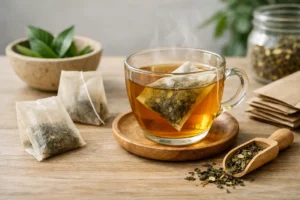
Packaging is the most visible part of the responsibility, because it remains after consumption. Therefore, its choice must be examined precisely and not with easy characterizations. A biodegradable tea pyramid, for example, can reduce the use of conventional plastic materials and offer space for the leaves and herbs to grow during extraction. Thus, it combines functionality with a more careful material choice.
On the other hand, biodegradability makes sense when accompanied by proper information on the disposal of the material and an overall design that avoids excesses. The same applies to any retail or HORECA packaging: durability, recyclability, transport weight, and product protection need to be balanced. A package that is light but does not properly preserve the product can ultimately lead to waste.
Sustainability, therefore, does not require sacrificing quality. It requires design to serve both quality and durability. In this regard, premium aesthetics are not at odds with responsibility. When design has a purpose, it helps the product be protected, presented with clarity, and consumed with greater awareness.
From Home to HORECA, Choice Has an Impact
Hospitality professionals know that a beverage is not just an addition to a menu. It is part of a guest's memory. A hotel that serves an aromatic Greek concoction at breakfast or a café that offers herbal iced tea with a real botanical base gives its guests something more substantial than a standard refrigerator selection.
For HORECA, the sustainable choice also needs practicality: consistent quality, clear presentation, different packaging formats, and a story that the staff can convey in a natural way. The origin should not sound like advertising text. It is enough to be true. "Greek herbs," "pure recipe," "careful packaging" are phrases that gain value when confirmed by taste.
Tea Odyssey expresses this journey through premium herbal teas and iced teas, focusing on Greek organic herbs and mountain tea. It is a proposal that treats the beverage as a small cultural act: a moment of enjoyment, designed with respect for the place where it begins.
How to Choose More Consciously
The best choice isn't always the loudest on the shelf. Read the ingredients list and look for recognizable ingredients. Pay attention to whether the product lists herbs or real extracts, rather than relying solely on fragrances. Consider provenance, especially when it's tied to crops and flavors you're familiar with.
Also consider how you consume the beverage. For your daily routine, a pyramid-shaped tea may provide less unnecessary packaging per serving than other options, depending on the ingredients and how you serve it. For a night out, a quality ready-made herbal iced tea may be the most practical solution, as long as it maintains its botanical truth and doesn't replace the raw material with sweetness.
Change doesn't have to be dramatic to be worthwhile. It can start with the next sip: a pure-source herb, a recipe that respects its natural voice, and packaging designed to leave less behind. So the beverage becomes a quiet, everyday choice with a purpose.